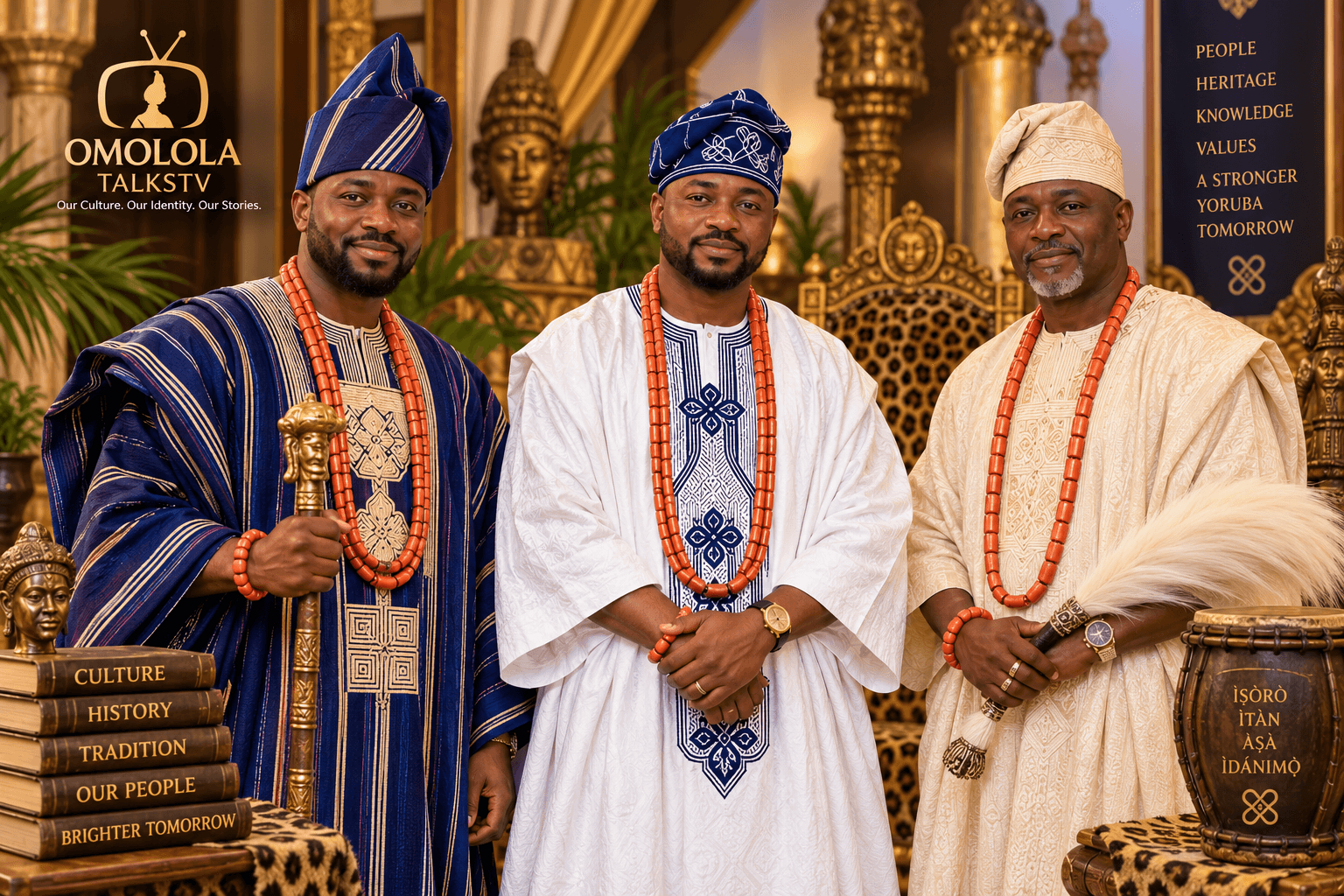

In Module One of Omolola TalksTV Yàrá Ìkẹ́kọ̀ọ́, we explored one of the Yoruba words that is no longer commonly heard in everyday conversation—Parákòyí. Together, we discovered that it represents far more than a successful trader; it reflects wisdom, integrity, leadership, and service.
Today, we begin Module Two, where we will examine another pair of Yoruba words that many people use interchangeably: Gbajúmọ̀ and Gbajúgbajà. Although they are often treated as if they mean the same thing, they carry different meanings in Yoruba language and thought.
Join us once again as we continue preserving the richness of the Yoruba language—one word, one lesson, and one generation at a time.
OMOLOLA TALKSTV YÀRÁ ÌKẸ́KỌ̀Ọ́
MODULE 2 – GBAJÚMỌ̀ & GBAJÚGBAJÀ
Lesson 008
Gbajúmọ̀ and Gbajúgbajà: Are They the Same?
Ẹ káàbọ̀ sí Omolola TalksTV Yàrá Ìkẹ́kọ̀ọ́.
Language is one of the greatest treasures of the Yoruba people. However, as time passes, some words gradually lose their distinct meanings because people begin to use them interchangeably.
Two such words are Gbajúmọ̀ and Gbajúgbajà.
You may hear someone say:
"Ó jẹ́ ènìyàn gbajúmọ̀."
Another person may say:
"Ó jẹ́ ènìyàn gbajúgbajà."
Many people assume these two expressions mean exactly the same thing.
But do they?
The answer is not completely.
Although both words describe people who are known by others, they are not identical in meaning. Understanding the difference helps us appreciate the richness and precision of the Yoruba language.
What Does Gbajúmọ̀ Mean?
The word Gbajúmọ̀ "refers to someone who is well known or widely recognised.
Such a person may be known because of their profession, achievements, talents, position, or even frequent public appearance.
A musician whose songs are heard everywhere may become gbajúmọ̀.
A respected teacher who has served a community for many years may become gbajúmọ̀.
A doctor, journalist, actor, business owner, athlete, or community leader may also become gbajúmọ̀ because many people know who they are.
Being gbajúmọ̀ simply means being recognised by a large number of people.
It does not, by itself, tell us whether the person is admired, respected, or influential.
Classroom Question
Can someone become Gbajúmọ̀ simply because many people know their name?
Think about your answer before reading Lesson 009.
Editor's Note
Yorùbá language, titles, and customs may vary across different kingdoms and communities. Omolola TalksTV presents the most widely accepted understanding while respectfully acknowledging regional differences where they exist.
Omolola TalksTV Yàrá Ìkẹ́kọ̀ọ́
Dedicated to preserving, documenting, and teaching Yorùbá language, history, culture, traditions, and values for present and future generations.
Kọ́. Ṣètọ́jú. Fi sílẹ̀ fún àwọn tó ń bọ̀.
Learn. Preserve. Pass It On.