OMOLOLA TALKSTV YÀRÁ ÌKẸ́KỌ̀Ọ́
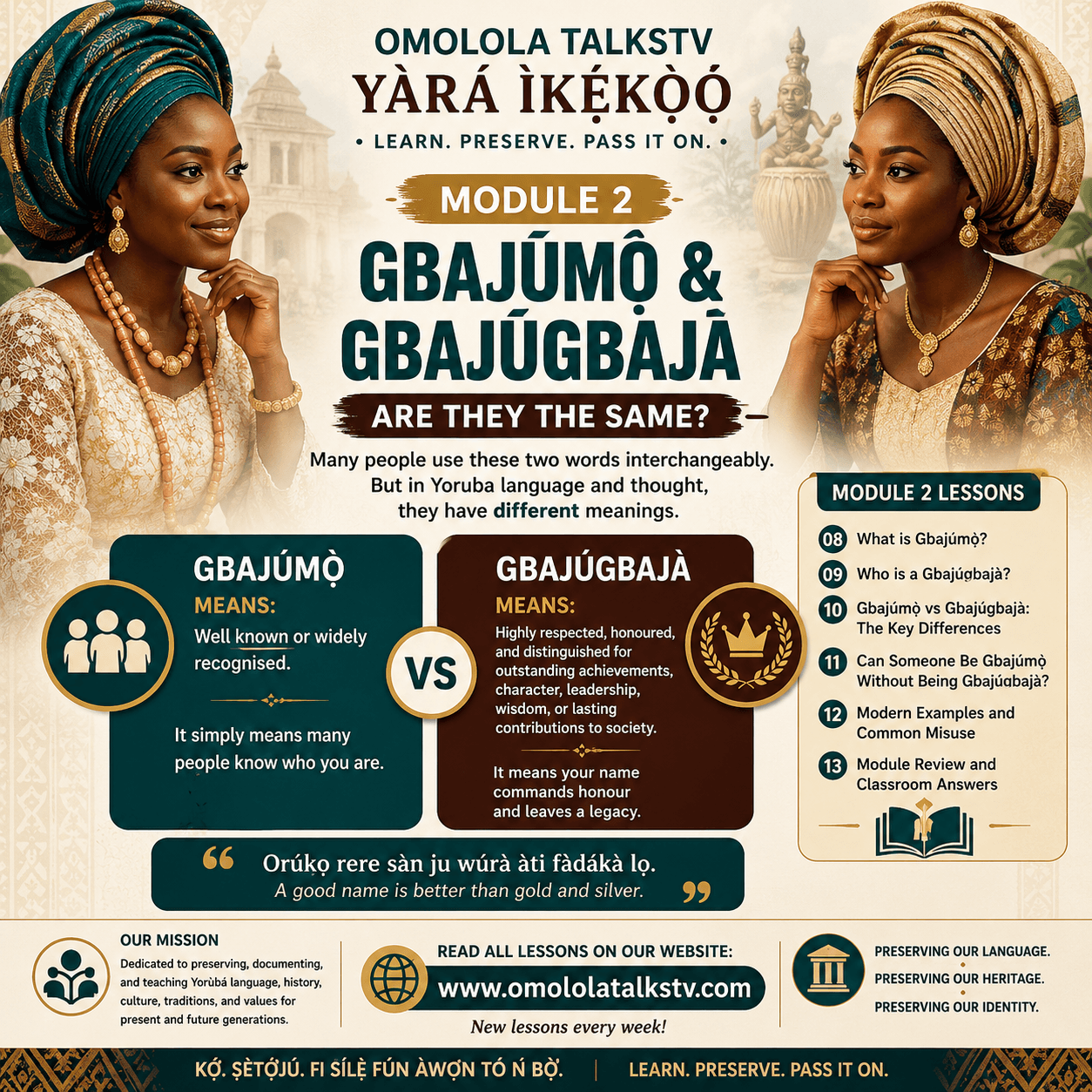
MODULE 2 – GBAJÚMỌ̀ & GBAJÚGBAJÀ
Lesson 010
Gbajúmọ̀ and Gbajúgbajà: What Is the Difference?
Ẹ káàbọ̀ sí Omolola TalksTV Yàrá Ìkẹ́kọ̀ọ́.
In our previous lessons, we learned that Gbajúmọ̀ refers to someone who is widely known, while Gbajúgbajà describes someone whose life and achievements have earned exceptional honour, distinction, and lasting respect.
At first glance, the two words may appear to mean the same thing. However, the Yoruba language makes an important distinction between being known and being truly distinguished.
Gbajúmọ̀: Being Well Known
A person becomes Gbajúmọ̀ when many people know their name.
They may be recognised because of their profession, business, music, sports, public office, or social media presence.
Being Gbajúmọ̀ simply means being familiar to many people.
It does not automatically tell us how that recognition was earned.
Gbajúgbajà: Being Distinguished
A Gbajúgbajà is more than a well-known individual.
The person is remembered because of lasting achievements, honourable conduct, meaningful contributions, and a positive legacy.
Their reputation commands admiration and respect, not merely attention.
A Simple Way to Remember
Think of it this way:
Gbajúmọ̀ answers the question:
"Do people know this person?"
Gbajúgbajà answers another question:
"What lasting impact has this person made?"
A person's name may become popular overnight.
A person's legacy is built over many years.
This is why Yoruba culture places great value on character, service, and honour rather than temporary popularity.
A Yoruba Reflection
Our ancestors understood that popularity could come and go.
However, a good name continues to speak even after a person is gone.
This is why they taught us:
"Orúkọ rere sàn ju wúrà àti fàdákà lọ."
A good name is better than gold and silver.
A Gbajúgbajà is remembered because of that good name.
Classroom Question
If two people are equally famous, but one is admired for integrity and lifelong service while the other is known mainly because of controversy, who better reflects the idea of a Gbajúgbajà? Why?
Think carefully before reading the next lesson.
Editor's Note
Yorùbá language, titles, and customs may vary across different kingdoms and communities. Omolola TalksTV presents the most widely accepted understanding while respectfully acknowledging regional differences where they exist.
Omolola TalksTV Yàrá Ìkẹ́kọ̀ọ́
Dedicated to preserving, documenting, and teaching Yorùbá language, history, culture, traditions, and values for present and future generations.
Kọ́. Ṣètọ́jú. Fi sílẹ̀ fún àwọn tó ń bọ̀.
Learn. Preserve. Pass It On.