YÀRÁ ÌTÀN | SERIES ONE
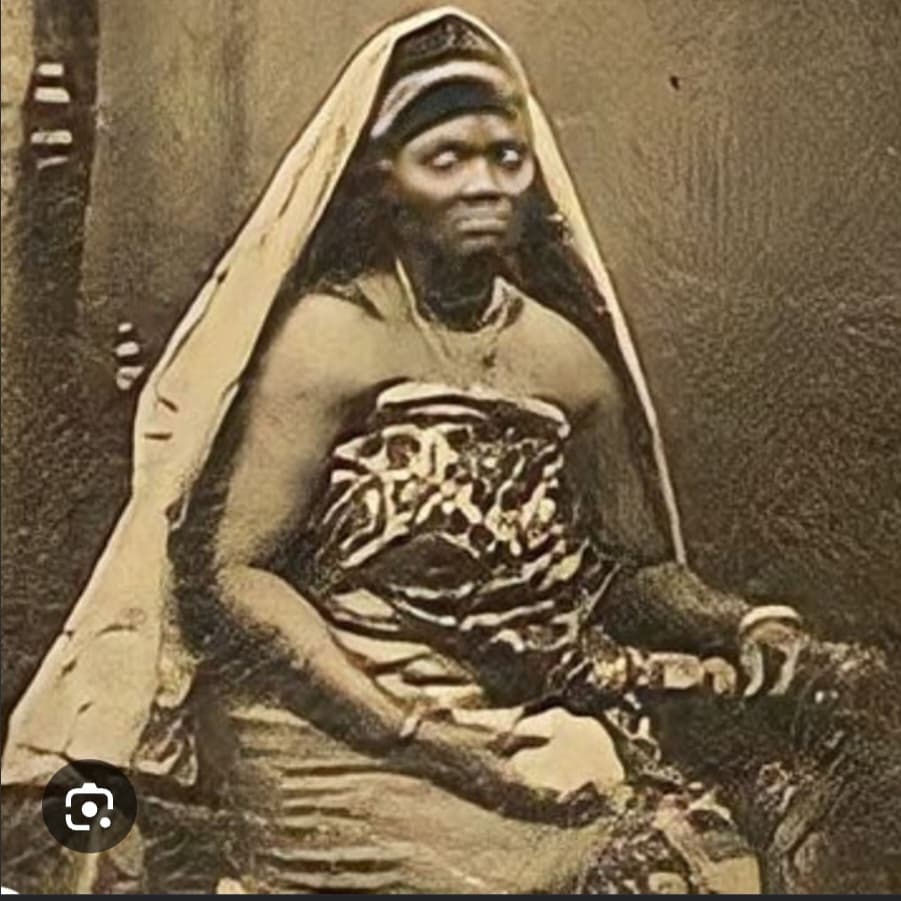
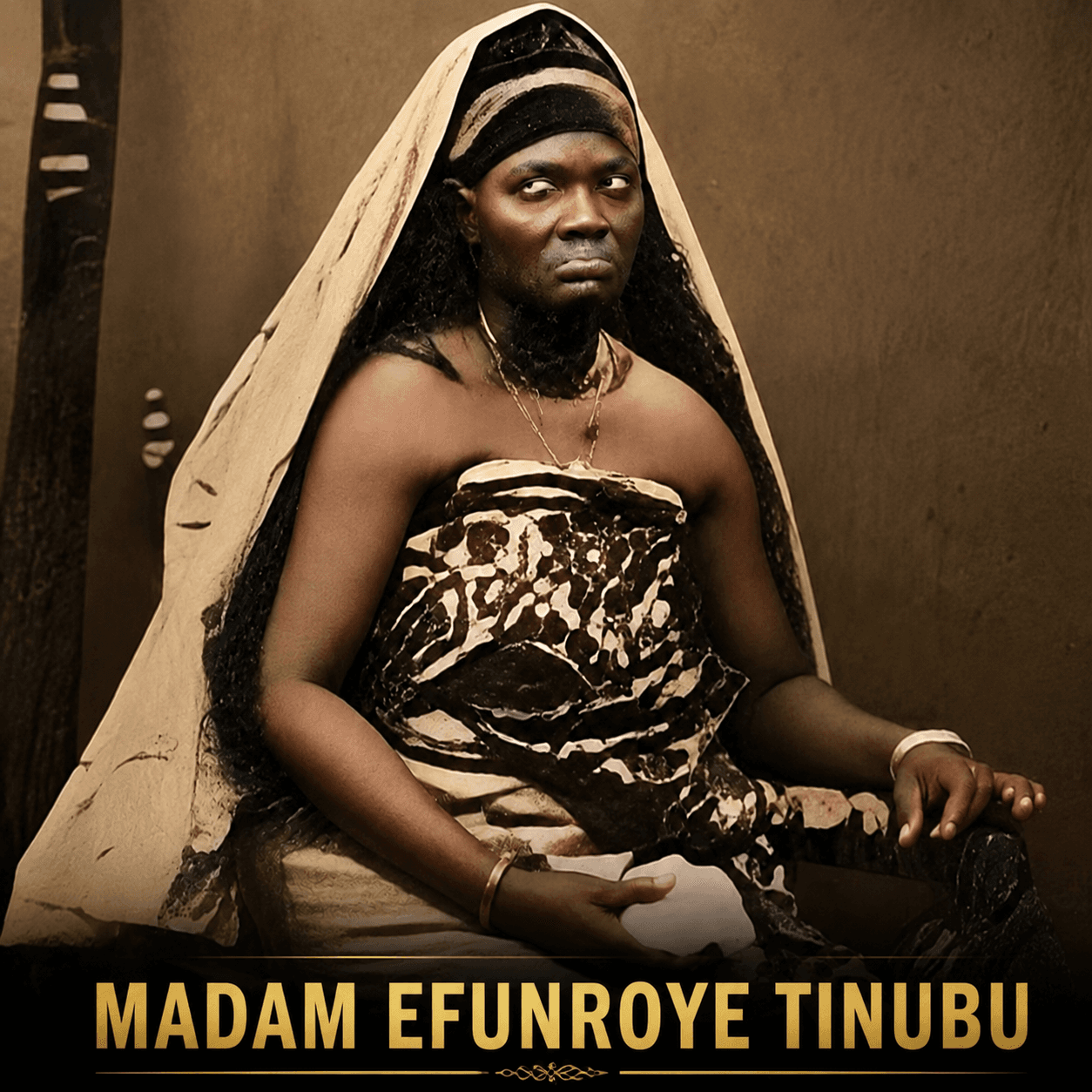
MADAM EFUNROYE TINUBU
Power, Commerce, Politics and Legacy
LESSON 001: WHO WAS MADAM EFUNROYE TINUBU?
There are some people in history whose stories are easy to tell. You mention their names, talk about what they did, and move on.
Madam Efunroye Tinubu is not one of those people.
Depending on who is telling her story, you may meet a completely different woman.
Some remember her as a successful Yoruba businesswoman who became wealthy and politically powerful at a time when women were not usually at the centre of political affairs.
Some remember her for her influence in Lagos and Abeokuta.
Some celebrate her as a strong woman who stood her ground against British interference.
And then there is another part of her story that can not be pushed aside: her involvement in the trade in enslaved people.
So which Efunroye Tinubu are we supposed to believe?
The truth is, we can not understand her by choosing only the part of her life that makes us comfortable.
That is why, here in Yàrá Ìtàn, we are going to take our time.
Before we praise her, before we condemn her, let us first meet the woman and understand the world she lived in.
BEFORE THE MADAM TINUBU WE KNOW
Efunroye Tinubu was born in Egbaland in the early nineteenth century. Her birth is commonly placed around 1810, although historical accounts do not agree completely on the exact year or every detail surrounding her birthplace.
This is where we need to correct something that is often repeated.
You may have read that Efunroye Tinubu was born in Abeokuta around 1810. But the Abeokuta we know today had not yet developed as the major Egba settlement it later became. Abeokuta emerged during the upheavals of the nineteenth century as Egba people displaced by warfare gathered around the rocky refuge that gave the city its name.
So, rather than forcing certainty where history has left us with questions, it is safer to say that Efunroye was born in Egbaland and later became closely associated with Abeokuta.
And this is exactly what Yàrá Ìtàn is about.
Sometimes, something has been repeated so many times that we stop asking whether it is actually correct.
Here, we will ask.
BEFORE POLITICS, THERE WAS BUSINESS
Long before Efunroye became the powerful woman remembered today, she knew the world of trading.
Commerce was not strange to Yoruba women. Women bought and sold goods, controlled spaces in the marketplace, and, in some cases, built considerable wealth through trade.
Efunroye grew within that environment and developed into a very successful trader.
But her early life was not simply a straight road from childhood to wealth and power.
She married, had children, and became a widow. Then came another marriage that would take her story in a completely different direction.
She married Adele Ajosun, the exiled Oba of Lagos.
And from this point, things began to change.
ENTER LAGOS, BADAGRY, AND ROYAL POLITICS
Through Adele, Efunroye became connected to a much bigger world.
There was Lagos politics.
There was Badagry.
There were European merchants.
There were powerful African traders.
There were royal struggles.
And there was the Atlantic trade, including the buying and selling of human beings.
Efunroye was no longer simply trading within a local market. Her commercial connections expanded, and so did her influence.
Eventually, she became one of the most powerful merchants associated with nineteenth-century Lagos.
But we need to stop here for a moment.
Because this is usually where the conversation about Madam Tinubu becomes heated.
YES, WE WILL TALK ABOUT SLAVERY
We are not going to hide that part of her history.
Madam Efunroye Tinubu participated in the trade in enslaved human beings.
But we are also not going to throw that sentence at you and close the book.
Who was being sold?
Who was buying?
Where were enslaved people coming from?
What role did warfare play?
What roles did African rulers and merchants play?
What role did European demand play?
How did the Atlantic system work?
And when Britain began fighting the transatlantic slave trade, was abolition the only thing Britain wanted on the West African coast?
These are questions we need to answer if we truly want to understand what happened.
This is where history becomes uncomfortable because the full story does not fit neatly into “white people did this” or “Africans did that.”
There were Africans who participated in the buying and selling of fellow Africans.
There were European merchants and plantation economies whose demand helped turn that trade into an enormous Atlantic system.
One truth does not cancel the other.
We will get there.
Not through anger.
Not through social media quotations that nobody can properly trace.
And not because we want to defend Madam Tinubu.
We will get there because those who suffered deserve to have their history told properly.
THE WOMAN WAS BECOMING POWERFUL
When Adele returned to the Lagos throne, Efunroye's connection to Lagos became even stronger.
Even after his death, she did not disappear quietly from the political scene.
Her businesses continued.
Her wealth increased.
Her connections widened.
Gradually, the trader became much more than a trader.
She became involved in the political struggles surrounding Lagos and its rulers. Later, her story would take her back to Abeokuta, where she became an important figure in Egba society and eventually held the title of Iyalode.
Think about that journey for a moment.
A woman born into an unsettled period of Yoruba history became wealthy enough, connected enough and politically influential enough that generations after her death, Nigerians still know the name Tinubu Square in Lagos.
Yet behind that famous name is a story far more complicated than the monument.
SO, WHO WAS EFUNROYE TINUBU?
If you are already asking whether she was a good woman or a bad woman, I will say: hold that question for now.
We have only opened the door.
There is still so much we haven't discussed.
We haven't properly entered the Lagos she knew.
We haven't understood the wars happening across Yorubaland.
We haven't followed the trade routes.
We haven't examined her political influence.
We haven't properly confronted slavery.
And we haven't reached the British yet.
By the time we finish this series, you may admire some things about Efunroye Tinubu.
Some things may trouble you.
You may even disagree with some of the choices she made.
That is okay.
Yàrá Ìtàn is not here to tell you who your heroes should be.
We are here to open the history, look at what the evidence tells us, and allow you to understand the people who came before us in all their complexity.
For today, we have met Madam Efunroye Tinubu.
In our next lesson, we need to meet her world.
Because sometimes, before you can understand a person, you first have to understand the time in which they lived.
TO BE CONTINUED...
YÀRÁ ÌTÀN | SERIES ONE: MADAM EFUNROYE TINUBU
NEXT: LESSON 002
THE WORLD AROUND EFUNROYE TINUBU
War, Displacement, Trade and a Changing Yorubaland
ABOUT YÀRÁ ÌTÀN
Yàrá Ìtàn is the History Classroom of Omolola TalksTV, created to preserve Yoruba and Nigerian history through careful research and honest storytelling. We do not tell history to create heroes or manufacture villains. Where the evidence is clear, we say it. Where accounts disagree, we say that too. And where we simply do not know, we will not pretend that we do.
We remember. We question. We learn. We preserve.
Àṣà kì í kú.
Omolola TalksTV
Preserving Yoruba Culture Through Storytelling