OMOLOLA TALKSTV YÀRÁ ÌKẸ́KỌ̀Ọ́
MODULE 1 – PARÁKÒYÍ
Lesson 007
Module One Review: What Have We Learned About Parákòyí?
Ẹ káàbọ̀ sí Omolola TalksTV Yàrá Ìkẹ́kọ̀ọ́.
Congratulations!
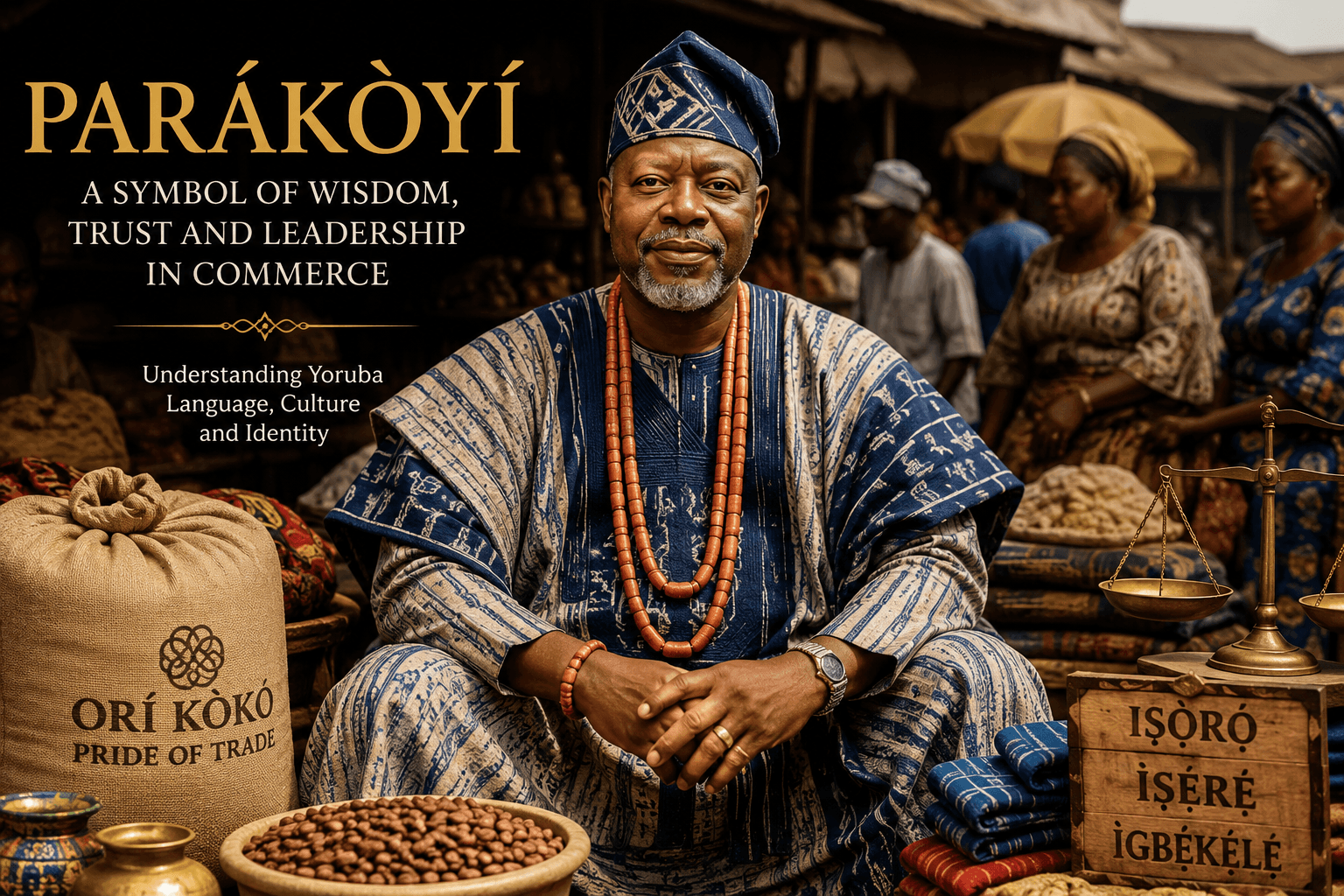
If you have followed this module from Lesson 001 to Lesson 006, you have completed an important journey into one of the most respected concepts in Yoruba commerce.
When many people hear the word Parákòyí, they simply think of a successful trader.
However, throughout this module, we have discovered that the word carries a much deeper meaning.
We have learned that a Parákòyí represents more than business success.
It represents wisdom.
It represents integrity.
It represents leadership.
It represents experience.
Above all, it represents service to the community and the responsible use of influence.
Before we conclude this module, let us revisit the classroom questions together.
Classroom Review
Lesson 001 Question
Can someone inherit wealth and automatically become a Parákòyí?
Answer
No.
A person may inherit wealth or even inherit a family business, but commercial wisdom, integrity, leadership, and the respect of the community can not simply be inherited.
Those qualities are developed through years of learning, experience, discipline, and good character.
Lesson 002 Question
Can a woman be called a Parákòyí?
Answer
Yes, depending on the context.
Traditionally, the title and its responsibilities may vary from one Yoruba kingdom to another.
However, in modern figurative usage, a woman who demonstrates commercial wisdom, leadership, integrity, and outstanding business achievement may rightly be described as reflecting the spirit of a Parákòyí.
Lesson 003 Question
Which quality is more important in becoming a Parákòyí: wealth, wisdom, integrity, or experience?
Answer
All four are important.
However, Yoruba philosophy consistently teaches that ìwà (good character) is the foundation upon which every other quality rests.
Without integrity, wealth can not command lasting respect.
Lesson 004 Question
Should business leadership be judged by gender or by character and competence?
Answer
Leadership should always be judged by character, competence, responsibility, and contribution to society.
Throughout Yoruba history, both men and women have made remarkable contributions to commerce.
Lesson 005 Question
Which Yoruba proverb about character or honesty inspires you the most?
Answer
There is no single correct answer.
One proverb that perfectly reflects the philosophy of this module is:
"Orúkọ rere sàn ju wúrà àti fàdákà lọ."
A good name is better than gold and silver.
This reminds us that reputation remains one of life's greatest treasures.
Lesson 006 Question
Who would you describe as a modern-day Parákòyí, and why?
Answer
There is no single correct answer.
Different people may choose different entrepreneurs.
What matters is not fame alone, but whether the individual reflects the values traditionally associated with Parákòyí—commercial wisdom, integrity, resilience, leadership, service, and a positive contribution to society.
What Have We Learned?
During this module, we have learned that:
• A Parákòyí is far more than an ordinary trader.
• Every Parákòyí may be an Oníṣòwò, but not every Oníṣòwò becomes a Parákòyí.
• Wealth alone does not make someone a Parákòyí.
• Character, wisdom, experience, leadership, and service remain the true foundations of lasting success.
• Traditional Yoruba titles are more than names; they represent values, responsibilities, and history.
Most importantly, we have learned that preserving the meaning of our words also preserves the identity of our people.
Language is more than communication.
Language is memory.
Language is history.
Language is identity.
Congratulations!
You have successfully completed
MODULE ONE – PARÁKÒYÍ
Thank you for joining us on this educational journey.
We hope this series has deepened your understanding of one of the most respected concepts in Yoruba commerce and inspired you to appreciate the wisdom preserved in our language.
A Call to Preserve Our Heritage
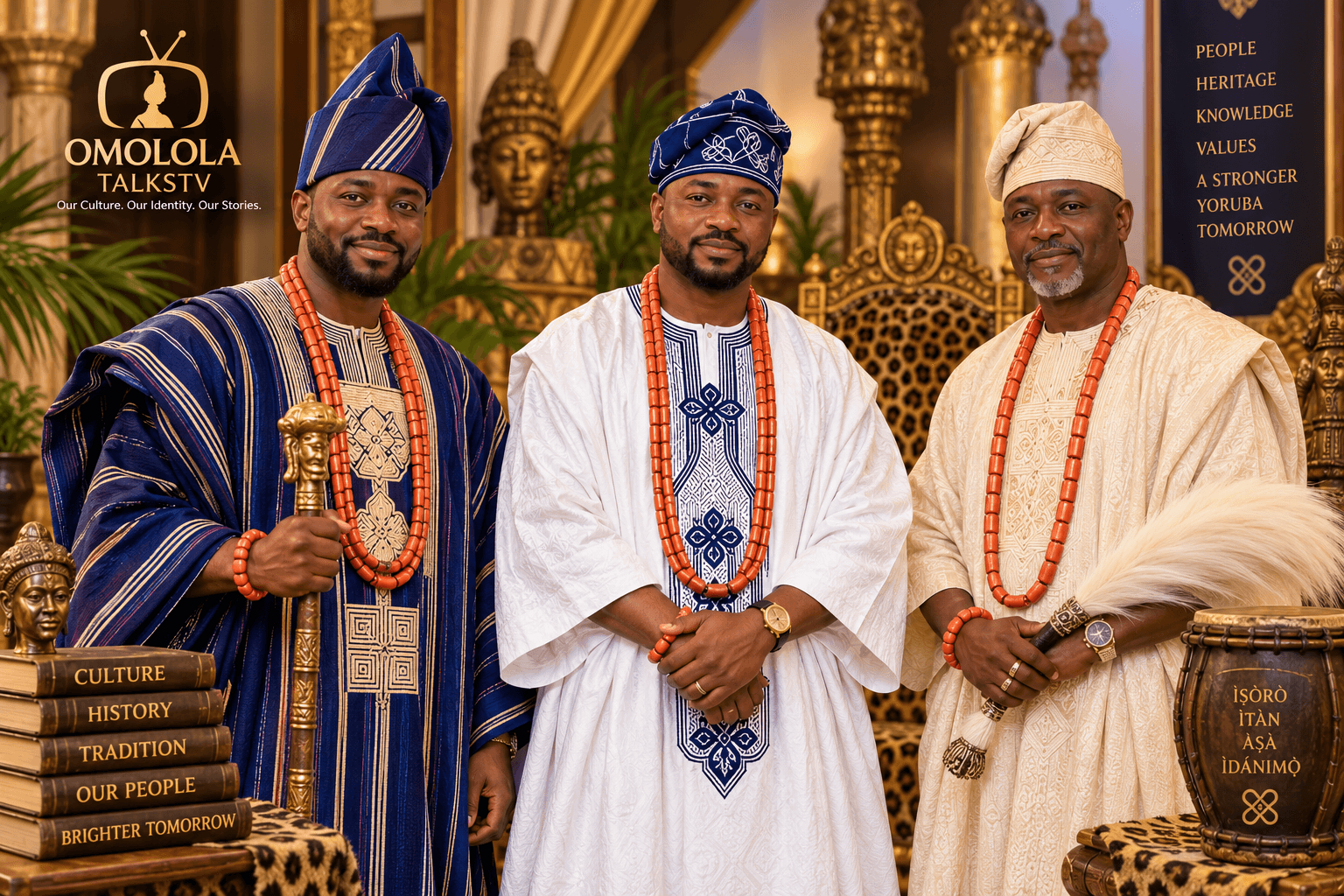
As we conclude our first module of Omolola TalksTV Yàrá Ìkẹ́kọ̀ọ́, we respectfully appeal to His Imperial Majesty, Ọba Adeyeye Enitan Ogunwusi, Ojaja II, the Ooni of Ife; His Imperial Majesty, Ọba Abímbọ́lá Akeem Ọwọadé I, the Alaafin of Oyo; and our revered traditional rulers across Yorubaland.
The Yoruba people possess a rich heritage of traditional titles, each carrying unique responsibilities, history, and cultural significance. While many chieftaincy titles continue to be conferred today, some historic titles connected with commerce, craftsmanship, leadership, and community service are gradually fading from public consciousness.
Parákòyí is one of those titles.
For generations, it represented commercial wisdom, integrity, leadership, and service to the trading community. It reflected the respect our ancestors had for honest enterprise and responsible leadership.
Today, Yorubaland is blessed with accomplished entrepreneurs, merchants, industrialists, and business leaders whose contributions continue to strengthen our communities and economy.
As we preserve our language and culture, we also hope that historic titles such as Parákòyí, where appropriate and in accordance with the customs of each kingdom, will continue to be remembered, preserved, and, where tradition permits, recognised.
Our appeal is not simply about reviving a title.
It is about preserving a part of our civilisation.
Every traditional title tells a story.
Every story preserves a value.
Every value strengthens our identity.
May our language continue to flourish.
May our traditions continue to inspire.
May our heritage continue to live on.
Next Module
MODULE 2
Gbajúmọ̀ "and Gbajúgbajà
Many people use these two words interchangeably.
Are they really the same?
In our next module, we will discover the important difference between being well-known and being truly distinguished in Yoruba thought.
We look forward to learning with you again.
Editor's Note
Yorùbá language, titles, and customs may vary across different kingdoms and communities. Omolola TalksTV presents the most widely accepted understanding while respectfully acknowledging regional differences where they exist.
Omolola TalksTV Yàrá Ìkẹ́kọ̀ọ́
Dedicated to preserving, documenting, and teaching Yorùbá language, history, culture, traditions, and values for present and future generations.
Our Mission
Kọ́. Ṣètọ́jú. Fi sílẹ̀ fún àwọn tó ń bọ̀.
Learn. Preserve. Pass It On.