OMOLOLA TALKSTV YÀRÁ ÌKẸ́KỌ̀Ọ́
MODULE 3 – OLÓYÈ & ÌJOYÈ
Lesson 015
Who Is an Olóyè? Looking Beyond the Beads and Cap
Ẹ káàbọ̀ sí Omolola TalksTV Yàrá Ìkẹ́kọ̀ọ́.
In our previous lesson, we asked a simple question:
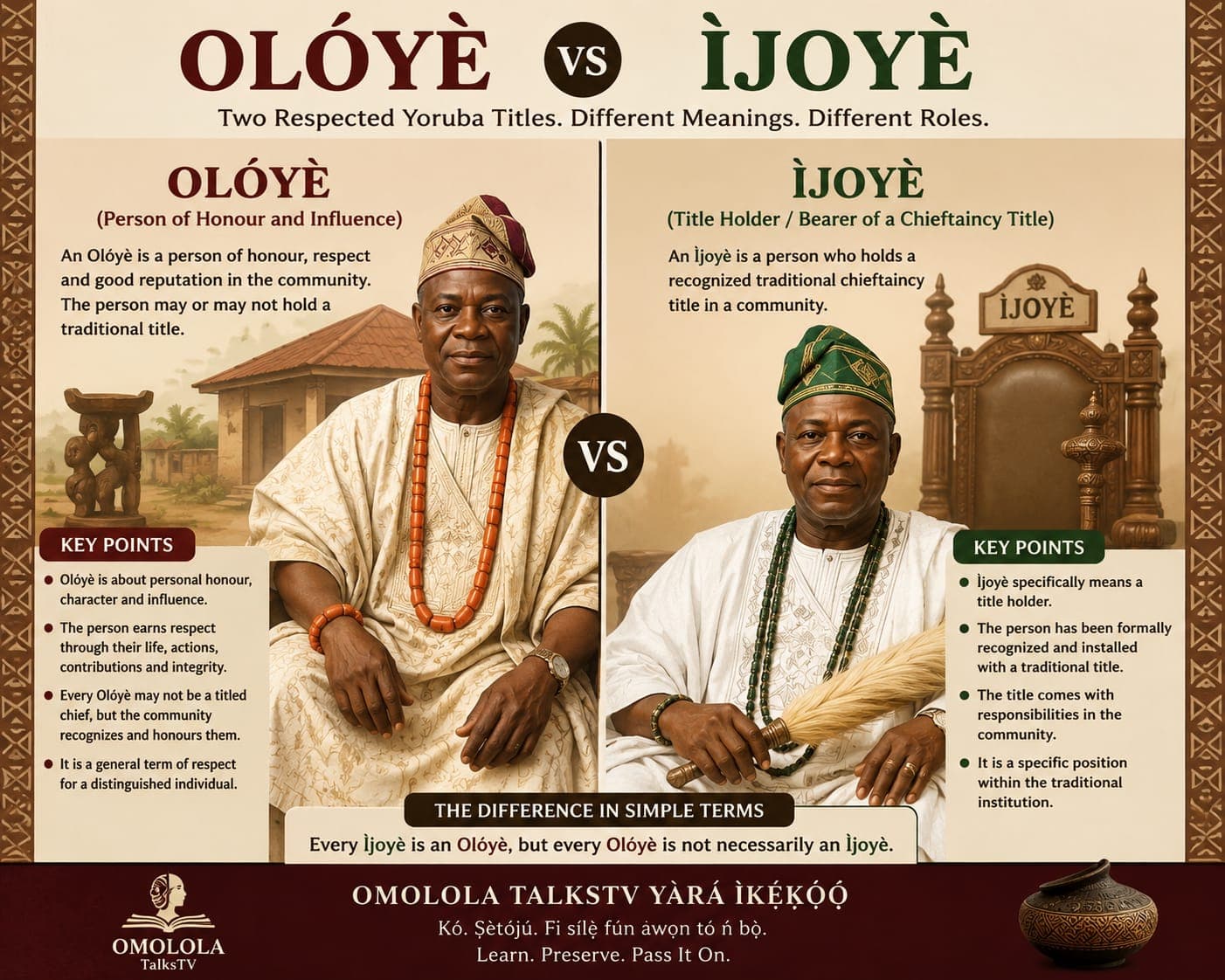
Are Olóyè and Ìjoyè really the same?
Many of us have grown up hearing these words at traditional ceremonies, family gatherings, festivals, and palace events.
Sometimes, we hear someone say,
"Ẹ jẹ́ kí àwọn Olóyè wọlé."
At another event, someone introduces a guest as an Ìjoyè.
Over time, many people began using the two words as though they always mean exactly the same thing.
Before we compare them, let us first understand one of them.
Who is an Olóyè?
More Than a Title
If someone asks ten Yoruba people who an Olóyè is, you may receive ten different answers.
Some will simply say,
"An Olóyè is a chief."
That answer is not wrong.
But it is not the complete picture either.
The Yoruba language often carries meanings that go beyond a direct translation.
The word Olóyè comes from the idea of someone who possesses or holds an oyè—a recognised title or position of honour within the traditional system.
Such a person is respected, not merely because of appearance, but because of the responsibility attached to that position.
Respect Comes Before Appearance
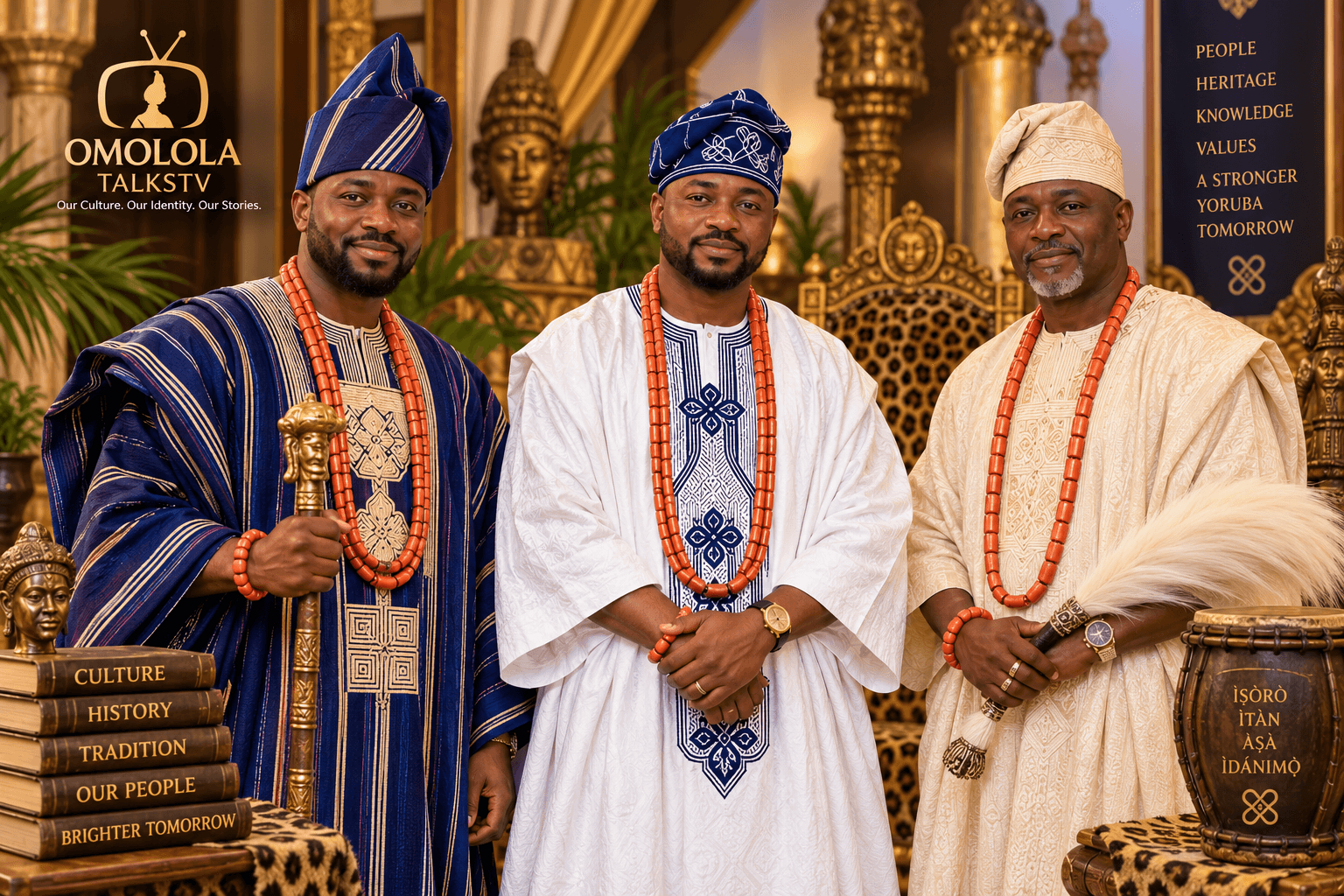
Today, many people associate an Olóyè with flowing agbádá, beads, embroidered caps, or ceremonial attire.
While these may be symbols of traditional honour, they do not create the title.
A beautifully dressed person is not automatically an Olóyè.
The honour comes from the recognised position the person occupies within the traditional institution of their community.
In other words, the clothing represents the title; it does not create it.
A Position of Responsibility
One thing our ancestors understood very well was that every honour came with responsibility.
An Olóyè was expected to contribute to the peace, growth, and wellbeing of the community.
The title was never meant to be worn only on celebration days.
It represented service.
It represented trust.
It represented accountability.
Perhaps this is one of the lessons we should never forget.
Titles may bring recognition.
Character gives those titles meaning.
A Living Tradition
Across Yorubaland, traditional institutions continue to play important roles.
Although customs and titles may differ from one kingdom to another, the underlying idea remains the same.
An Olóyè is not simply someone who enjoys honour.
An Olóyè is someone expected to uphold the dignity, values, and traditions of the community.
That is why many Yoruba people continue to treat traditional titles with great respect.
A Thought Before We Continue
As we study Yoruba language, let us remember that some words can not be fully understood through translation alone.
They must also be understood through history, culture, and tradition.
That is what makes our language so rich.
Classroom Question
In your opinion, should a traditional title be seen as a privilege, a responsibility, or both? Tell us why.
There is no single correct answer.
We would love to hear your thoughts in the comments.
Editor's Note
The understanding and use of traditional titles may vary across different Yoruba kingdoms and communities. This lesson presents the most widely accepted understanding while respectfully acknowledging those variations.
Omolola TalksTV Yàrá Ìkẹ́kọ̀ọ́
Dedicated to preserving, documenting, and teaching Yorùbá language, history, culture, traditions, and values for present and future generations.
Our Mission
Kọ́. Ṣètọ́jú. Fi sílẹ̀ fún àwọn tó ń bọ̀.
Learn. Preserve. Pass It On.