Bullying Is Not a Joke. It Is Violence.
In recent days, a viral video showing a student being bullied at Igbinedion Education Centre Edo State has sparked outrage across social media.
But the painful truth is that this is not the first time Nigerians have seen something like this. Sadly, it reflects a much larger problem that has been quietly growing across schools, colleges, and universities for years.
Many bullying incidents happen behind closed doors. Some briefly trend online, people react with anger, and then the conversation fades. Once the public attention disappears, the issue is often pushed aside.
When this happens, a dangerous message is sent to students: that bullying can happen without real consequences.
At Omolola Talkstv, we believe it is important to speak openly about issues that affect young people and the future of our society. Bullying is not just a school issue. It is a social problem that reflects the values we pass down to the next generation.
The Lasting Impact of Bullying
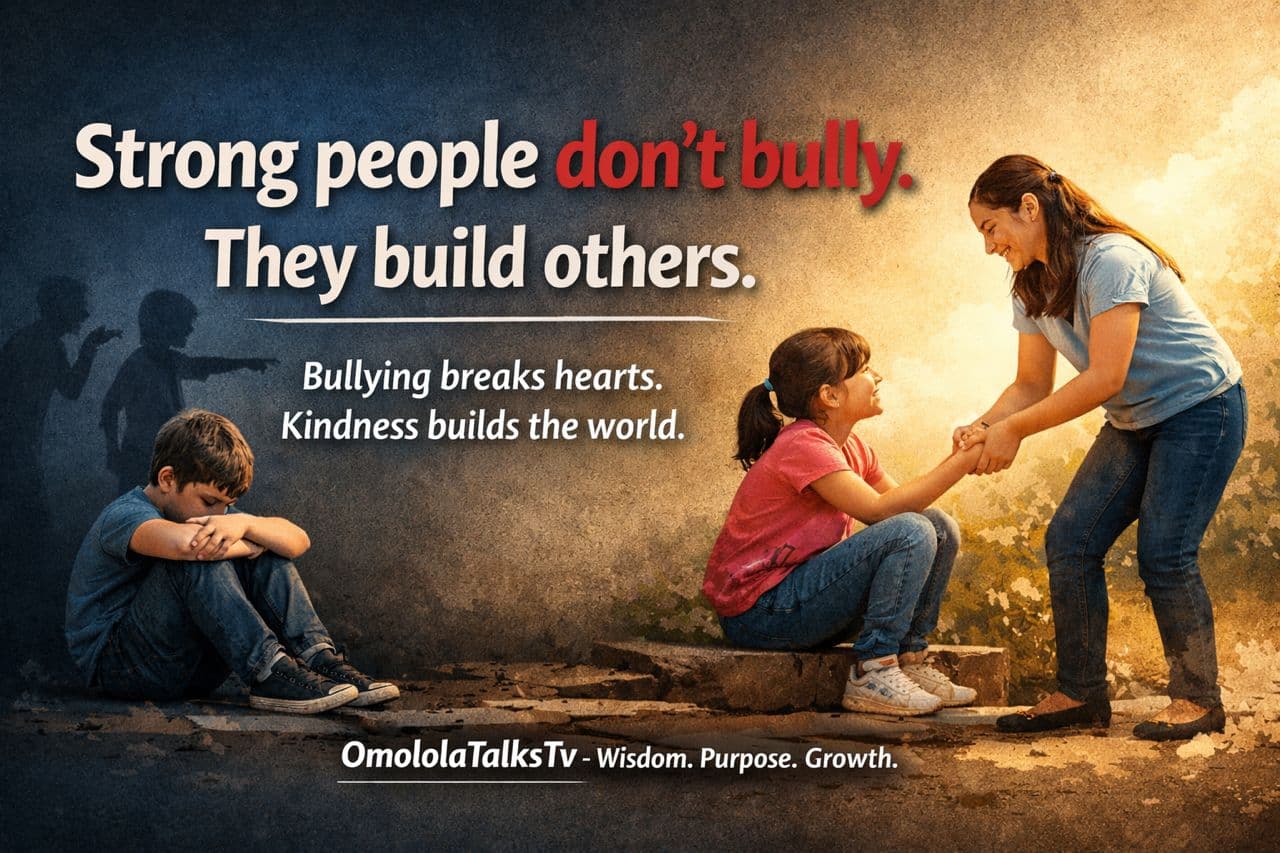
Bullying is often dismissed as “children’s behaviour” or simple “school rivalry.” But its effects can be deeply damaging.
Victims of bullying may struggle with emotional trauma, anxiety, loss of confidence, and in some cases long term mental health challenges.
What may look like a moment of power for the bully can become a lifetime of pain for the victim.
Schools and universities should be places where young people feel safe to learn, grow, and discover themselves. When bullying is allowed to exist in these spaces, that sense of safety disappears.
Parents Are the First Teachers
Before children meet teachers in school, they meet teachers at home. Parents are the first educators in a child’s life. The lessons children learn within the home often shape how they behave in the world.
Empathy, kindness, patience, and respect are not values that magically appear later in life. They are taught through everyday examples. Children observe how adults speak to others, how conflicts are handled, and how people are treated.
If a child grows up seeing insults, intimidation, or aggressive behaviour being normalised, there is a high chance that behaviour will appear again in the child’s interactions with others.
Many children who bully others in school do not suddenly develop that behaviour overnight. Often, there are early signs at home. Small acts of aggression, disrespect toward siblings, mocking others, or enjoying the discomfort of others may appear early.
Unfortunately, these behaviours are sometimes dismissed as minor incidents. Parents may say, “They are just children,” or assume the child will grow out of it without guidance.
But without proper correction, discipline, and emotional guidance, those behaviours can grow stronger over time.
What begins as small acts at home can later become violence in school.
When Parents Ignore the Warning Signs
Raising a child requires more than providing food, shelter, and education. It requires active attention to character.
When parents overlook harmful behaviour because it seems small, they may unintentionally allow it to grow.
Discipline is not cruelty. Guidance is not punishment. These are necessary tools for shaping responsible human beings.
Children must learn early that respect for others is non negotiable.
Another uncomfortable truth is that sometimes the example children see comes directly from adults. When parents themselves bully others, whether through verbal abuse, humiliation, or intimidation, children learn that power comes from dominance rather than kindness.
Children imitate what they see.
If respect is practiced at home, it becomes natural outside the home.
Parents, Institutions, and Society Must Work Together
Educational institutions also carry responsibility. When incidents happen, schools and universities must respond firmly and transparently. Silence or weak responses only allow the problem to grow.
Students who witness bullying should feel supported to speak up rather than pressured to remain silent.
But preventing bullying is not something schools can do alone. Families, educators, and society must work together to create an environment where respect is valued more than intimidation.
The Need for Real Consequences
Nigeria must treat bullying with the seriousness it deserves. Educational regulators and government bodies should ensure that strong anti bullying policies exist in schools and universities.
There must be clear consequences for harassment, intimidation, and violence.
Accountability sends a powerful message: respect for others is not optional.
Building a Culture of Respect
If we truly want safer schools and campuses, we must begin by raising children who understand empathy and responsibility.
Respect must be stronger than intimidation.
Kindness must be valued more than cruelty.
Bullying will not disappear by ignoring it. It will only disappear when society collectively decides that it will no longer be tolerated.
Final Thought
The way a society treats its most vulnerable members reveals the true strength of its values.
Protecting students from bullying is not only about discipline in schools.
It is about how we raise children, the values we teach at home, and the example we set every day.
Because the future of a nation begins in the homes where its children are raised.
✍️
Omolola Talkstv