Nigeria’s Security Crisis Part 3: From Complaints to Solutions What Must Be Done Now
By Omolola Talkstv
We have spoken.
We have questioned.
We have called for accountability.
Now, we must talk about solutions.
Because a nation can not survive on outrage alone.
It must move towards action.
1. Strengthen Intelligence, Not Just Reaction
One of the biggest challenges in Nigeria’s security system is that responses often come after damage has already been done.
This must change.
Security must become proactive, not reactive.
This means:
Better intelligence gathering
Stronger local information networks
Early warning systems in vulnerable communities
The people on the ground often know when danger is coming.
The system must learn to listen.
2. Empower Community-Based Security Structures
Security can not be effective if it is too far removed from the people.
Local communities understand their environment better than anyone else.
Government must:
Work closely with trusted local vigilante groups
Create structured community policing systems
Ensure proper training and accountability
Security works best when it is both local and coordinated nationally.
3. Protect and Motivate Security Personnel
Nigeria has brave officers risking their lives daily.
They must not be forgotten.
Support should include:
Better equipment
Timely salaries and welfare
Clear policies that strengthen morale
A discouraged security force can not protect a nation effectively.
We must strengthen those who are already standing for us.
4. Clear and Consistent Security Policy
There must be clarity in the national security direction.
Policies must be:
Firm
Transparent
Focused on protecting citizens first
Any approach that creates confusion, weakens trust, or raises fear among citizens must be reviewed carefully.
Public safety must always come first.
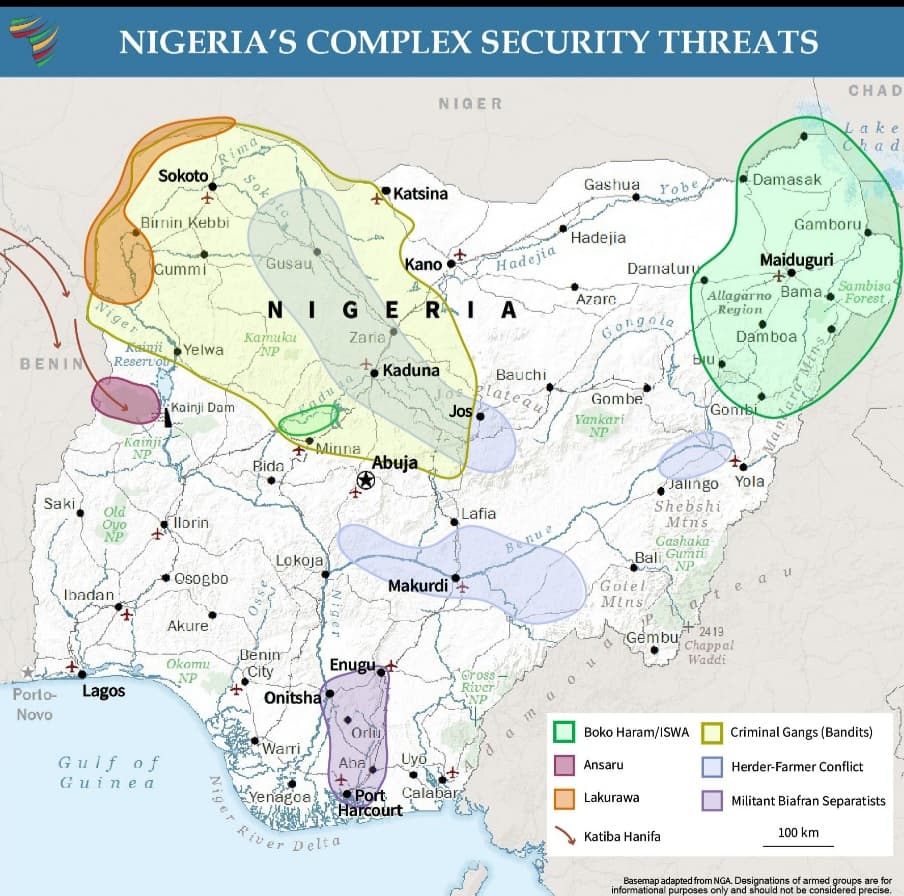
5. Secure Borders and Monitor Movement
Security challenges do not exist in isolation.
Borders must be properly monitored to reduce:
Illegal movement of weapons
Uncontrolled entry of armed groups
This requires:
Technology (surveillance systems, drones where necessary)
Stronger coordination between agencies
Regional cooperation
A nation that can not monitor its borders will struggle to control internal security.
6. Strategic Security Partnerships Must Be Transparent and Effective
As conversations around improving Nigeria’s security continue, there have been discussions about international support and training for our security forces.
In the past, when global support, such as from countries like the United States, was considered, it generated mixed reactions among Nigerians.
Now, there are reports of plans to send Nigerian soldiers to Turkey for training.
This raises important questions that deserve open and honest answers:
What criteria are being used to select international partners?
How will these partnerships directly improve security on the ground?
Are we engaging with countries that have the strongest experience in handling similar security challenges?
Countries like Israel and others are often referenced globally for their security expertise. This naturally leads citizens to ask whether Nigeria is fully exploring all strategic options available.
This is not about comparison or division.
It is about effectiveness.
At the end of the day, every decision must be guided by one priority:
What will best protect Nigerian lives?
Security decisions must be transparent, inclusive, and focused on results that benefit the entire nation regardless of region, background, or belief.
Because insecurity does not choose sides.
And neither should solutions.
7. Real Accountability at All Levels
Solutions will not work without accountability.
Every level of leadership must be responsible:
Federal Government
State Governments
Security Agencies
Legislators
There must be:
Regular updates to citizens
Visible actions, not just statements
Consequences where failures occur
Accountability builds trust.
Trust strengthens a nation.
8. Honest Communication With Citizens
People deserve to know what is happening.
Not silence.
Not vague statements.
Clear communication builds:
Confidence
Cooperation
National unity
When citizens understand the situation, they can support solutions instead of living in fear.
9. If Capacity Is Limited, Seek Responsible Support
This is a difficult but necessary conversation.
If current systems are overwhelmed, leadership must be honest enough to explore responsible and structured support options.
Not out of weakness.
But out of responsibility to protect lives.
The priority must always remain:
Saving lives
Restoring stability
Protecting communities
This is the Way Forward
Nigeria is not without solutions.
What is needed is:
Seriousness
Consistency
Courage
We can not continue to normalise fear.
We can not continue to explain away loss.
We must act.
Final Thoughts
This conversation is not about blame.
It is about direction.
It is about asking:
What kind of country do we want to be?
What kind of future are we building?
Because leadership is not just about power.
It is about protection.
And citizens are not asking for too much.
They are asking to live.
Let Us Open This Conversation
Which of these solutions do you believe Nigeria should prioritise first?
What practical steps can be taken immediately?
How do we move from words to real action?
Let us talk. Let us think. Let us act
This is where we pause this conversation.
Not because the issue is over, but because the message is clear.
Nigeria can not continue like this.
We can not normalise fear.
We can not accept silence.
We can not keep explaining what should already be understood.
Across these three parts, we have:
Spoken about the reality
Asked the difficult questions
And laid out possible solutions
Now, the responsibility is no longer just on leadership.
It is on all of us.
To stay aware.
To stay engaged.
To refuse to normalise what is wrong.
Because change does not begin from silence.
It begins from voices that refuse to ignore the truth.
Nigeria belongs to all of us.
Protecting it must be a shared responsibility.
Omolola Talkstv
Preserving culture. Speaking truth. Asa ki ku.