OMOLOLA TALKSTV YÀRÁ ÌKẸ́KỌ̀Ọ́
MODULE ONE – PARÁKÒYÍ
Lesson 002
Parákòyí and Oníṣòwò: Are They Really the Same?
Focus
● Meaning of Oníṣòwò
● Difference between Oníṣòwò and Parákòyí
● Why every Parákòyí is an Oníṣòwò but not every Oníṣòwò becomes a Parákòyí
Ẹ káàbọ̀ sí Omolola TalksTV Yàrá Ìkẹ́kọ̀ọ́.
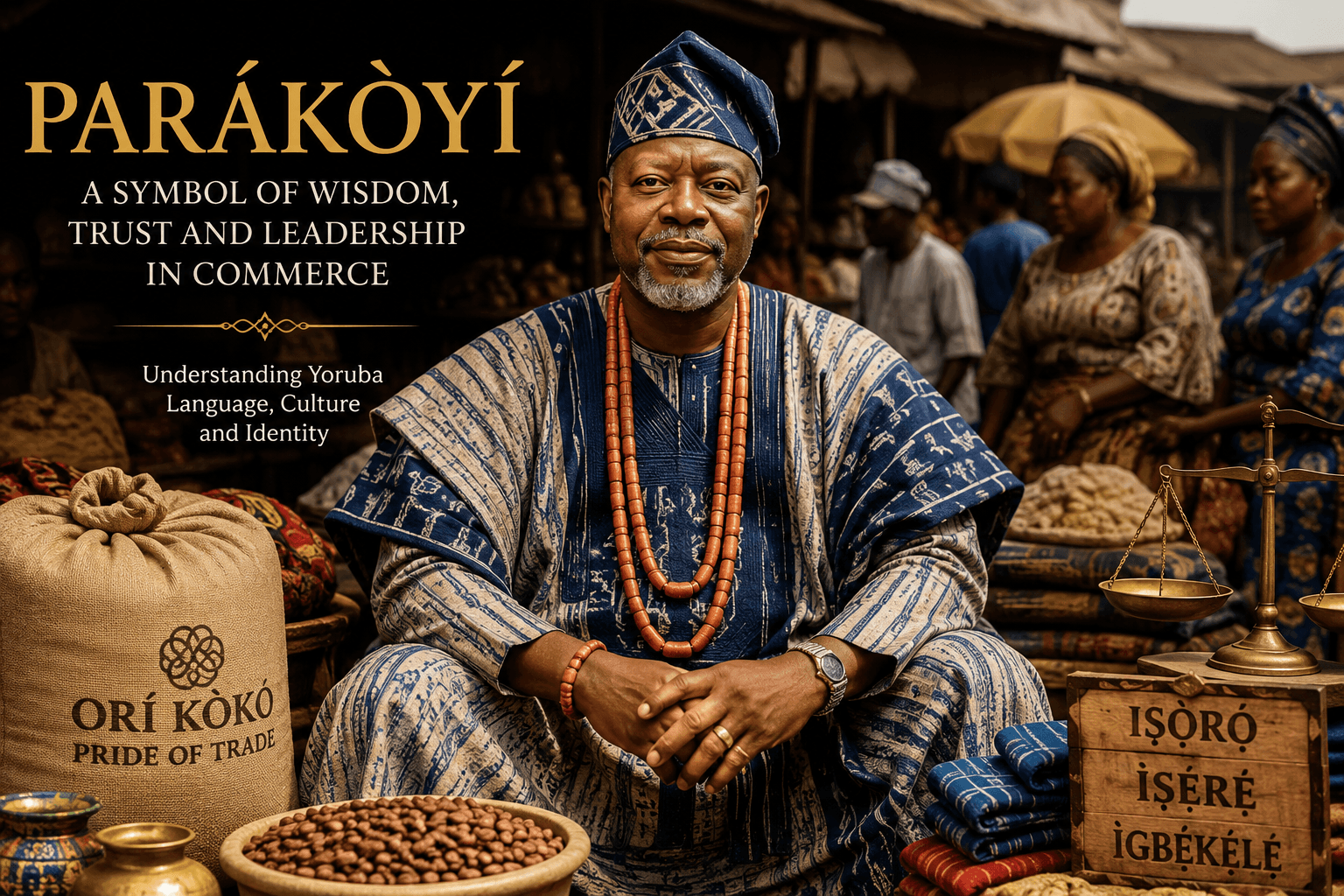
In our previous lesson, we learned that a Parákòyí is more than just a successful trader. Traditionally, the title is associated with leadership, commercial wisdom, and experience in trade.
Today, let us answer another question that many people often ask:
Are Parákòyí and Oníṣòwò the same?
The simple answer is No.
Although both words are connected with business and commerce, they do not mean the same thing.
Who is an Oníṣòwò?
An Oníṣòwò is simply a trader or business person.
Anyone who buys and sells goods or provides products and services for profit can be called an Oníṣòwò.
Whether the business is small or large, whether it operates in a local market or internationally, the person is still an Oníṣòwò.
A woman selling vegetables in the market is an Oníṣòwò.
A man who owns a supermarket is an Oníṣòwò.
Someone running an online business is also an Oníṣòwò.
The word simply describes a person engaged in business.
Then Who is a Parákòyí?
A Parákòyí is more than an Oníṣòwò.
Traditionally, the title refers to a recognised leader or representative of traders within a community. Such a person was respected not only because of business success but also because of wisdom, experience, integrity, and leadership in commerce.
In modern usage, the word is sometimes used figuratively to describe someone whose business knowledge and commercial experience have earned widespread respect.
In other words, every Parákòyí is an Oníṣòwò, but not every Oníṣòwò becomes a Parákòyí.
Experience matters.
Character matters.
Leadership matters.
Respect matters.
These are qualities that distinguish a Parákòyí from an ordinary trader.
This reminds us that in Yorùbá culture, titles are not merely about wealth. They often reflect responsibility, contribution, and the respect a person has earned within the community.
Understanding this difference helps us appreciate the richness of the Yorùbá language and why our ancestors carefully chose the words they used.
Key Takeaways
An Oníṣòwò is anyone engaged in business or trade.
A Parákòyí traditionally refers to a respected leader of traders or a holder of a commerce-related title.
In modern usage, Parákòyí may also describe someone with exceptional business wisdom and influence.
Every Parákòyí is an Oníṣòwò, but not every Oníṣòwò is a Parákòyí.
Classroom Question
Can a woman be called a Parákòyí? Why do you think so? Share your thoughts in the comments.
Editor's Note
Yorùbá words, titles, and traditions may vary across different kingdoms and communities. This lesson presents the widely accepted understanding while acknowledging that local customs and responsibilities may differ from one town to another.
Omolola TalksTV Yàrá Ìkẹ́kọ̀ọ́
Dedicated to preserving, documenting, and teaching Yorùbá language, history, culture, traditions, and values for present and future generations.
Kọ́. Ṣètọ́jú. Fi sílẹ̀ fún àwọn tó ń bọ̀.
Learn. Preserve. Pass It On.