
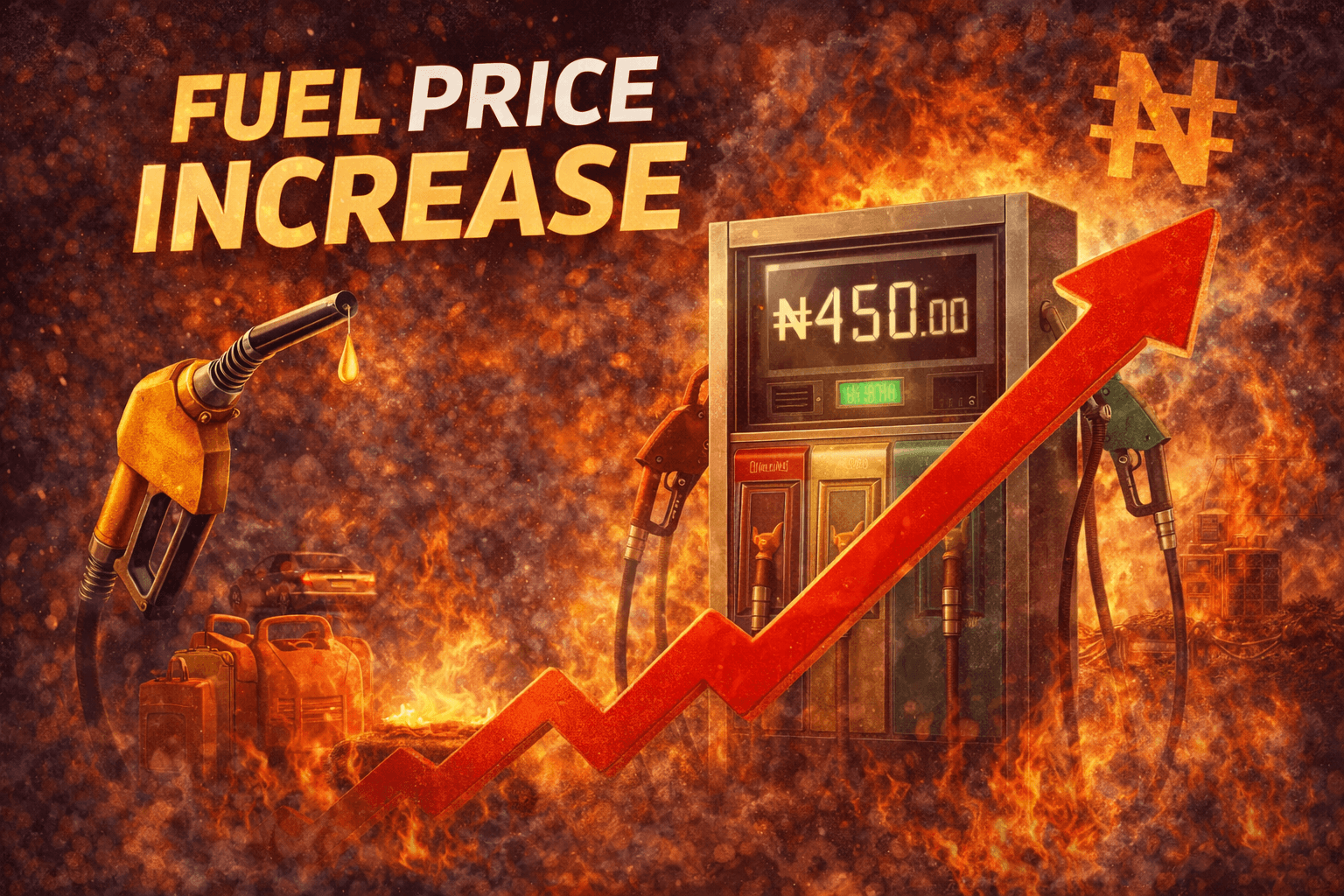
When Global Fuel Prices Rise: Why Nigerians Feel the Pain More.
Introduction
Fuel prices are rising across the world, and the reasons are not difficult to understand. Conflicts in the Middle East, shipping disruptions in the Red Sea, and production decisions by major oil producers have pushed global crude oil prices upward. Countries that rely on imported fuel often feel the immediate impact when international prices increase.
However, Nigeria’s situation stands out in a troubling way. Despite being one of the world’s major oil-producing nations, Nigerians often experience fuel price shocks more intensely than citizens in many non-oil producing countries. This raises an important question: Why does a country rich in natural resources struggle to shield its people from energy crises?
Understanding this paradox requires looking beyond global events and examining the structural realities within Nigeria itself.
Global Factors Behind Rising Fuel Prices
The global oil market is influenced by several interconnected factors.
Geopolitical tensions in the Middle East often affect oil production and transportation routes. Shipping disruptions in strategic areas such as the Red Sea increase the cost of transporting crude oil and refined petroleum products. Additionally, production decisions by oil-producing alliances such as OPEC can tighten supply and push prices upward.
When these factors combine, crude oil benchmarks rise. Countries that depend heavily on imports of refined petroleum products naturally experience increased domestic fuel prices.
These global realities are undeniable. No country operates in isolation from the international energy market.
Yet, the impact of these global changes is not felt equally everywhere.
Nigeria’s Paradox: An Oil-Rich Nation with Fuel Insecurity
Nigeria produces crude oil in large quantities and has done so for decades. In theory, this should provide a significant advantage during periods of global energy volatility.
However, years of policy failures and poor infrastructure management have created a paradox.
Nigeria exports crude oil but imports refined petroleum products.
For decades, state-owned refineries have struggled with inefficiency, underinvestment, and operational breakdowns. As a result, the country has depended heavily on imported fuel to meet domestic demand.
The Nigerian National Petroleum Company Limited has historically been responsible for managing much of this supply chain. However, the inability to maintain reliable refining capacity has left the country vulnerable to global market fluctuations.
Recently, the Dangote Refinery has begun supplying a significant portion of Nigeria’s domestic fuel needs, estimated to be between 57 and 62 per cent of national demand. While this development represents an important step toward reducing import dependence, it does not completely shield Nigeria from global price movements.
This is because the refinery itself purchases crude oil at international benchmark prices.
Therefore, even with domestic refining capacity improving, Nigeria remains tied to the global pricing structure of crude oil.
The Real Burden on Ordinary Nigerians
While economic discussions often focus on markets and policies, the true impact of fuel price increases is felt by ordinary citizens.
Fuel price changes in Nigeria affect almost every aspect of daily life. Transportation costs increase. Food prices rise due to higher logistics expenses. Electricity becomes more expensive in a country where many households rely on fuel-powered generators.
At the same time, the average Nigerian income remains extremely low.
The national minimum wage is modest, and many workers earn even less in informal sectors. Without strong social protection systems, citizens are left to absorb the full weight of rising living costs.
In many developed countries, governments provide buffers during energy crises. These may include transportation subsidies, tax adjustments, or targeted support for low-income households.
In Nigeria, such protective systems are limited or inconsistent.
As a result, global energy shocks translate almost immediately into deeper economic hardship for millions of people.
The Role of Governance and Long-Term Planning
It is important to acknowledge that Nigeria’s current situation did not develop overnight.
Decades of inconsistent policies, poor infrastructure management, and delayed reforms contributed to the present reality. The weaknesses within the country’s energy system accumulated over many years and across multiple administrations.
This means the crisis can not be attributed to a single government alone.
However, recognizing historical responsibility does not remove the need for present solutions. Each administration inherits challenges, but leadership is ultimately judged by how effectively it responds to them.
Building resilient systems requires long-term planning, transparent management of resources, and a commitment to strengthening domestic capacity.
For a country with vast natural resources, the goal should be clear: ensure that citizens are protected from extreme economic volatility whenever possible.
Seeing the Crisis Through Human Eyes
For many observers, discussions about fuel prices remain abstract economic debates. But for people living through these conditions daily, the issue is deeply personal.
Even those who live outside Nigeria often remain emotionally connected to the struggles of those back home. Concern for the well-being of fellow citizens does not disappear simply because someone is geographically distant.
It is also important that discussions about national challenges rise above divisions of tribe, religion, or partisan politics. When basic economic hardship affects millions of people, the focus should remain on understanding the problem and working toward practical solutions.
As Yoruba saying reminds us:
“Oníyà ni yóò jẹ́ èyí tó pọ̀ jù.”
The person who carries the burden is the one who truly understands its weight.
Conclusion
Global energy markets will always experience cycles of stability and disruption. No country can completely escape the influence of international economic forces.
However, nations with strong institutions and resilient infrastructure are better positioned to protect their citizens from the worst consequences of those disruptions.
Nigeria possesses enormous natural resources and immense human potential. The challenge is not the absence of wealth but the ability to transform that wealth into stability, opportunity, and dignity for ordinary people.
When global storms arise, the true measure of governance lies in how well a nation shelters its citizens from the rain.