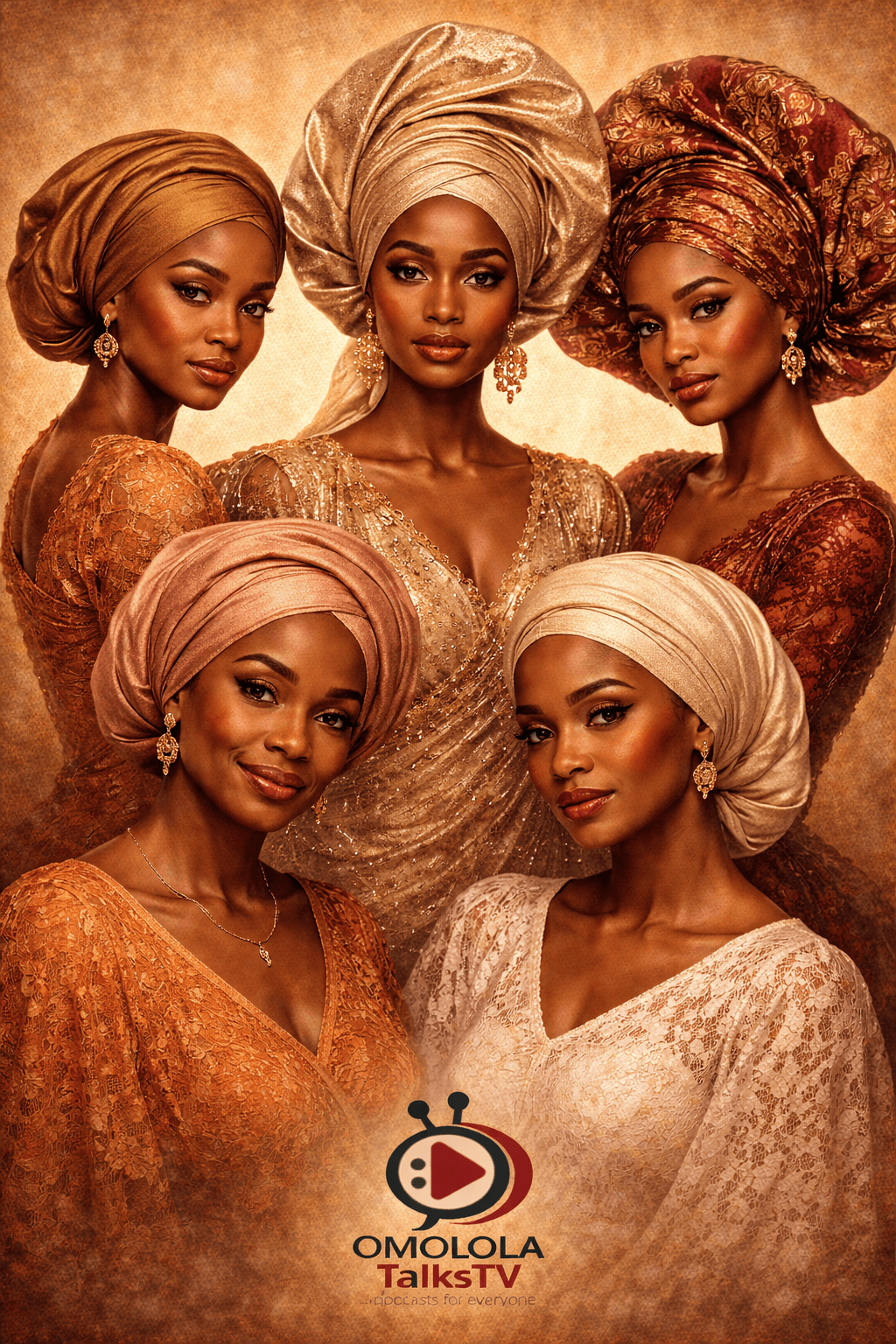
Continuation: Gèlè as Identity and Language.
Like I mentioned in my previous story, gèlè in Yoruba culture is not just a head tie.
It is language, status, emotion, and identity wrapped in fabric.
Before words were spoken, a woman’s gèlè already spoke for her.
In traditional Yorubaland, the style, size, colour, and direction of a gèlè carried meaning. It could announce joy, mourning, authority, humility, or readiness for celebration.
Let’s talk about the types of gèlè and what each represents.
Types of Gèlè & Meanings
Ìpàkó Aya (back of the head)
Wrapped low and neatly at the nape.
Meaning: humility, reserved nature, suitable for respectful occasions like meeting elders or family events.
Kókóró-ṣókè (Standing tall)
Tall, dramatic, rising above the head.
Meaning: boldness, power, and pride. Often worn for weddings, owambe, and festivals.
Aláró-dídì / Àbèlé (Wide and flamboyant)
Spread like wings, wide and stylish.
Meaning: joy, wealth, and flamboyance. A show of prosperity during celebrations.
Tùrántùrán (Loose & casual)
Lightly tied, relaxed style.
Meaning: everyday beauty, modest comfort, not for heavy ceremonies.
Àyámú (very small, close-fitting)
It's almost like a turban.
Meaning: simplicity and ease, often worn by elderly women or for casual gatherings.
Fashion & Symbolism
Colors:
White gèlè→ purity, spirituality (often used in traditional rites).
Gold / Champagne → wealth and prestige.
Blue → peace and calm.
Red / Burgundy → power, passion, celebration.
Occasions:
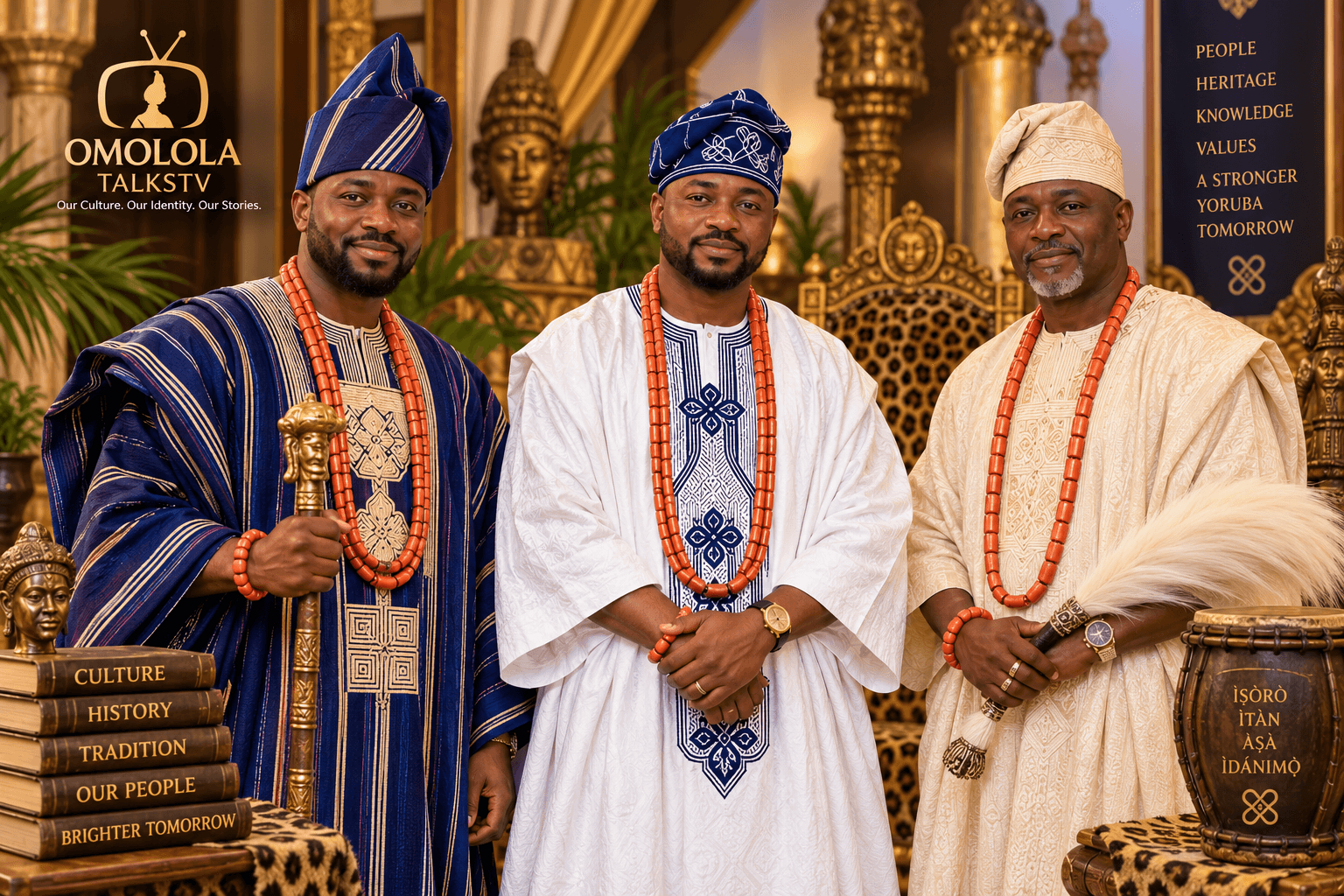
Weddings: Brides wear flamboyant gèlè, matching with the groom’s fìlà
Burials: Women tie more modest, respectful gele (often white or muted tones).
Festivals: Colourful, bold gele to honour the deities and show family prestige.
Symbol:
Gèlè is called “adé obìnrin” (the crown of a woman). Just like a man’s fìlà shows his identity, a woman’s gèlè is her pride and her crown.
I hope you enjoyed the gèlè story and were able to pick one or two colours that resonated with you, along with their meanings and the occasions they represent.
See you in my next article.
Don’t forget to follow and subscribe. It’s free, and it helps us keep telling our stories.
Thank you for being part of our journey 😊
Omolola Talkstv 🤝
Follow us for more educative and cultural content.
✍️
Omo'ba Omoluabi
Omólola Adepeju