
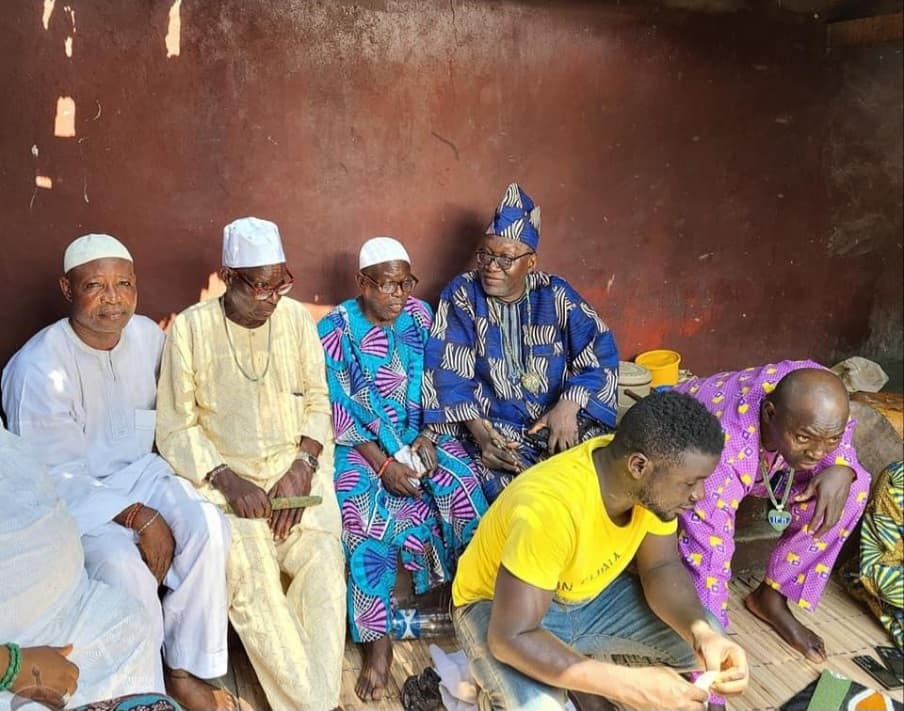
“In our previous article, we explained what Ogboni truly is…"
Is Ogboni Evil? Understanding the Misconception
One of the most common questions asked today is whether Ogboni is evil. This question did not come from traditional Yoruba understanding but from modern interpretations shaped by fear, misinformation, and cultural disconnection.
To answer this question clearly, we must first separate truth from assumption.
Ogboni, in its original form, is not an evil institution. It is a respected system within Yoruba civilization that was built on principles of justice, truth, and accountability.
The idea that it is evil is a narrative that developed over time, not a reflection of its true purpose.
Where Did the “Evil” Narrative Come From?
The misunderstanding of Ogboni can be traced to several historical and social factors.
During the colonial era, many African institutions were interpreted through foreign lenses. Systems that were not easily understood were often labelled as secretive, dangerous, or dark. Missionary teachings also contributed to this perception by presenting indigenous structures as oppositional to new religious beliefs.
Over time, this narrative spread and became widely accepted, especially among younger generations who no longer had direct access to traditional knowledge.
Another factor is secrecy. Ogboni, like many ancient institutions around the world, did not operate as an open system. Not everyone had access to its inner workings. This natural restriction created curiosity, and where there is curiosity without understanding, assumptions quickly follow.
What Ogboni Was Originally Meant To Be
In traditional Yoruba society, Ogboni was a council of elders responsible for maintaining balance in governance and society.
Its duties included:
Upholding justice
Preserving tradition
Ensuring moral order
Checking the excesses of kings
It functioned as a stabilizing force, ensuring that leadership did not become oppressive and that societal values were protected.
Ogboni was not separate from governance. It was part of the system that made governance accountable.
A System of Balance, Not Fear
Yoruba political systems were never designed to give absolute power to one individual. Instead, they were structured around balance.
The Ọba ruled, but institutions like Ogboni ensured that power was used responsibly.
This shows a level of political sophistication that is often overlooked. Long before modern concepts of checks and balances became widespread, Yoruba societies had already developed systems to regulate authority.
Ogboni stood as one of those systems.
It was not a force of fear. It was a force of control, discipline, and justice.
The Role of Ilẹ̀: Why the Earth Matters
A key part of understanding Ogboni is its connection to Ilẹ̀, meaning the earth.
In Yoruba belief, the earth is sacred. It represents truth because it can not be deceived. It represents stability because it supports all life. It represents continuity because generations pass through it.
Ogboni’s association with the earth reflects its role as a guardian of truth and justice.
It is a reminder that human authority is temporary, but truth is permanent.
Why It Still Matters Today
Understanding Ogboni is not just about the past. It is about reclaiming the depth of Yoruba civilization and correcting narratives that have been distorted over time.
When cultural institutions are misunderstood, people begin to disconnect from their heritage. But when they are properly understood, they become sources of identity, wisdom, and pride.
Ogboni represents a system where power was accountable, where tradition guided leadership and where justice was not negotiable.
These are values that remain relevant in any society.
Final Truth
Ogboni is not evil.
It is a misunderstood institution whose purpose has been overshadowed by misinformation and changing times.
To understand Ogboni is to understand that Yoruba civilization was built on structure, intelligence, and moral responsibility.
The more we learn, the clearer the truth becomes.
In our next episode,
we will explore the symbols of Ogboni in greater depth
including the meaning of Edan Ogboni and more.