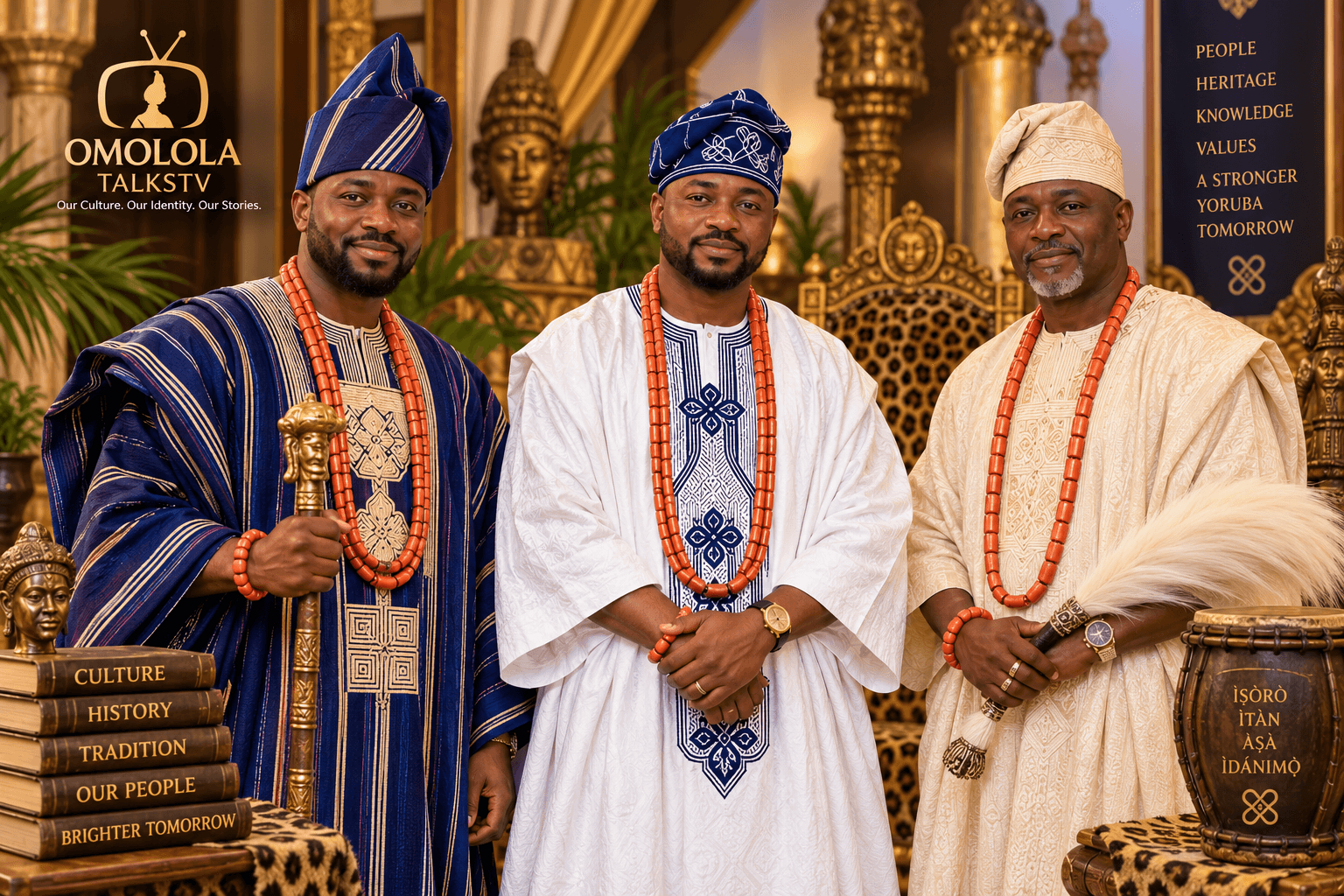
Ẹ káàbọ̀! Welcome to OMOLOLA TALKSTV YÀRÁ ÌKẸ́KỌ̀Ọ́📚
Yorùbá is more than a language it is a living heritage. It carries our history, values, wisdom, traditions, and identity. Yet, many beautiful Yorùbá words, titles, and cultural concepts are gradually being forgotten or misunderstood.
That is why we created Omolola TalksTV Classroom.
This classroom is dedicated to teaching and preserving the richness of Yorùbá language, culture, history, traditional institutions, proverbs, and values in a simple, engaging, and well-researched way for everyone young and old, at home and in the diaspora.
In this series, we will explore:
The meanings of Yorùbá words and expressions.
Traditional titles and their responsibilities.
The history behind our customs and institutions.
Common words people often misuse.
Yorùbá commerce, leadership, and philosophy.
Folktales, proverbs, and the lessons they teach.
The history, traditions, and unique identities of towns across Yorùbáland.
Our goal is not only to teach but also to preserve this knowledge for future generations.
Please note: Yorùbá language and traditions may vary across different towns and kingdoms. Where such differences exist, we will acknowledge them while presenting the most widely accepted understanding, supported by research and cultural context.
We invite you to learn with us, ask questions, share your knowledge, and contribute respectfully to the conversation. Together, we can preserve the beauty of Yorùbá heritage.
OMOLOLA TALKSTV YÀRÁ ÌKẸ́KỌ̀Ọ́
MODULE ONE – PARÁKÒYÍ
Understanding the Yorùbá Philosophy of Commerce
Lesson 001
Who Is a Parákòyí?
Focus
● Meaning of Parákòyí
● Traditional role
● Modern figurative use
● Why not every trader is a Parákòyí
Ẹ káàbọ̀ sí Omolola TalksTV Yàrá Ìkẹ́kọ̀ọ́.
Today, we begin a journey of rediscovering the richness of Yorùbá language, culture, history, and identity. In every lesson, we will explore the true meanings behind the words, titles, traditions, and values that have shaped Yorùbá civilisation for generations.
Our first lesson asks a simple but important question:
Who is a Parákòyí?
Today, the most common titles we hear for traders are Bàbá Ọjà, Ìyá Ọjà, Bàbá L'Ajé, and Ìyá L'Ajé. In many communities, these titles are given to respected market leaders or successful business people.
However, in recent times, we have also seen situations where people who have little or no connection with buying and selling are honoured with these titles simply because they are wealthy, politically influential, or socially prominent.
There is nothing wrong with honouring people for their achievements. Every community has its own way of recognising those who have contributed to society.
But beyond these popular titles, the Yorùbá people have always had a deeper way of recognising individuals—not merely by their wealth, but by what they have built, what they know, and the value they bring to their community.
That is why we are having this conversation today.
Have you ever heard the word Parákòyí?
Many people have heard it, yet very few truly understand what it means.
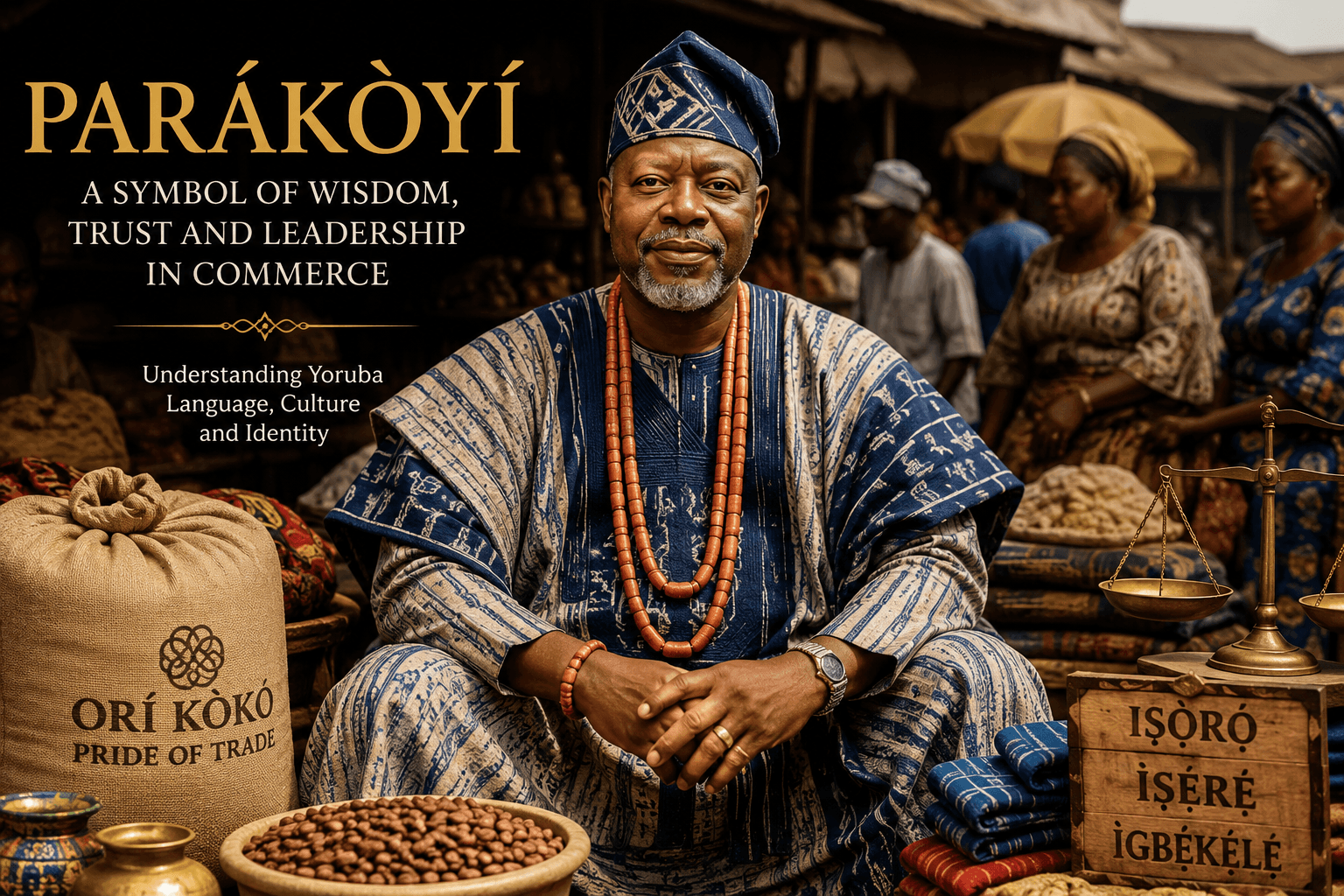
Traditionally, Parákòyí is a prestigious Yorùbá title associated with commerce. It refers to the recognised leader or representative of traders within a kingdom or community. Such a person was expected to understand the workings of trade, protect the interests of merchants, and advise traditional rulers on commercial matters.
A Parákòyí was not simply someone who owned a shop.
Neither was the title earned because someone became wealthy overnight.
The title represented experience, wisdom, trust, leadership, and commercial excellence.
Over time, the word has also come to be used figuratively to describe someone who possesses extraordinary knowledge of business.
A true Parákòyí understands far more than buying and selling.
A Parákòyí understands people.
A Parákòyí understands negotiation.
A Parákòyí knows when to invest and when to wait.
A Parákòyí understands that reputation is often more valuable than quick profit.
This is why not every trader is a Parákòyí.
Every Parákòyí may be a trader.
But not every trader has become a Parákòyí.
Someone who started trading yesterday may become successful tomorrow, but the title Parákòyí is earned through years of learning, discipline, consistency, and the respect of others.
It is not a title people give themselves.
It is a title that reflects what life and experience have made them become.
Perhaps this is one of the reasons the Yorùbá civilisation placed so much value on knowledge before recognition.
In Yorùbá culture, wealth alone was never considered enough.
Character mattered.
Integrity mattered.
Experience mattered.
Service mattered.
That is why our ancestors created titles that celebrated contribution rather than mere possession.
As society continues to change, perhaps it is time to rediscover the meanings behind these beautiful words instead of using them loosely.
When we understand our language, we understand our history.
When we understand our history, we understand ourselves.
Today, we have learned that a Parákòyí is more than a successful trader. A Parákòyí is a symbol of commercial wisdom, trusted leadership, and excellence in business.
Key Takeaways
Traditionally, a Parákòyí is a recognised leader of traders or a holder of a commerce-related title in Yorùbá society.
In modern usage, the word is also used figuratively to describe someone with exceptional business knowledge and commercial wisdom.
Not every trader is a Parákòyí.
Wealth alone does not make someone a Parákòyí.
Classroom Question
Can someone inherit wealth and automatically become a Parákòyí? Why or why not? Share your thoughts in the comments.
Editor's Note
Yorùbá words, titles, and traditions may vary across different kingdoms and communities. This lesson presents the widely accepted understanding of "Parákòyí" while acknowledging that local customs and responsibilities attached to the title may differ from one town to another.
Omolola TalksTV Yàrá Ìkẹ́kọ̀ọ́
Dedicated to preserving, documenting, and teaching Yorùbá language, history, culture, traditions, and values for present and future generations.
Kọ́. Ṣètọ́jú. Fi sílẹ̀ fún àwọn tó ń bọ̀.
Learn. Preserve. Pass It On.