OMOLOLA TALKSTV YÀRÁ ÌKẸ́KỌ̀Ọ́
MODULE 1 – PARÁKÒYÍ
Lesson 004
Can a Woman Be Called a Parákòyí?
Focus
● Women's role in Yoruba commerce.
● Traditional context.
● Modern figurative use.
● Respecting regional differences.
Ẹ káàbọ̀ sí Omolola TalksTV Yàrá Ìkẹ́kọ̀ọ́.
One of the classroom questions from our previous lesson asked:
Can a woman be called a Parákòyí?
Many people immediately answer "No" because they believe the title belongs only to men. Others confidently answer "Yes" because they have heard successful businesswomen described as Parákòyí.
So, which answer is correct?
The truth is that the answer depends on context.
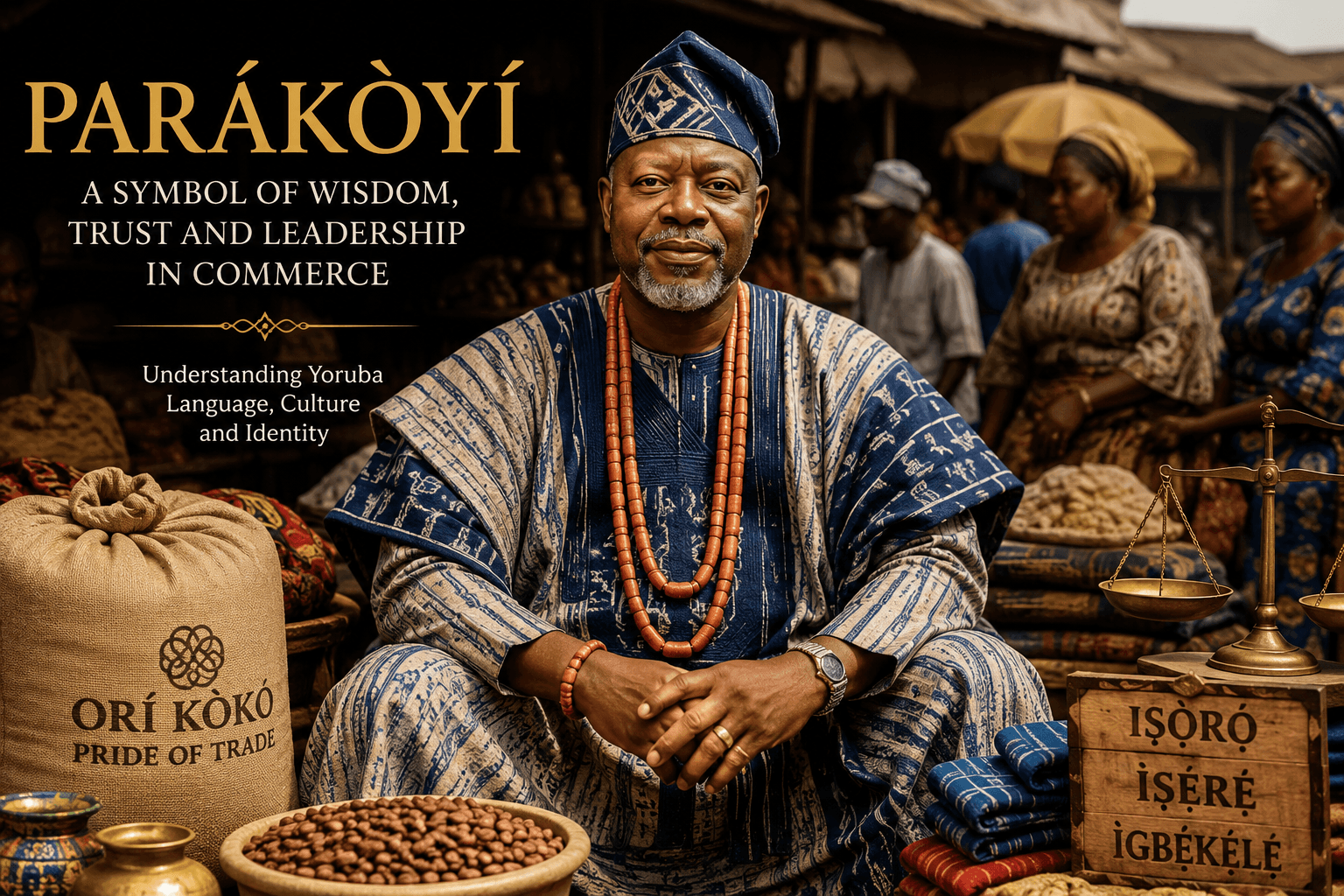
Traditionally, Parákòyí is a recognised Yoruba title associated with commerce and the leadership of traders. Like many traditional Yoruba titles, its appointment, responsibilities, and usage may vary from one kingdom or community to another. In many places, the office was historically occupied by men.
However, this does not mean that women were absent from commerce.
Far from it.
For centuries, Yoruba women have been among the most influential traders in West Africa.
They traded food.
They sold textiles.
They dealt in beads, spices, pottery, and other valuable goods.
Many travelled from one town to another, building commercial networks that supported families and strengthened local economies.
Markets such as those in Ìjẹ̀bú, Ìbàdàn, Òṣogbo, and other Yoruba towns have long been shaped by the dedication and enterprise of women traders
This is one of the reasons the position of Ìyálọ́jà became so important.
An Ìyálọ́jà is not merely a woman who sells goods. She is a recognised leader within the market, representing traders, maintaining order, and serving as a respected voice in commercial matters.
As society has evolved, language has also evolved.
Today, many people use the word Parákòyí in a figurative sense to describe someone whose business knowledge, commercial experience, leadership, and integrity command respect.
In that sense, a woman who has demonstrated these qualities over many years may rightly be described as a modern-day Parákòyí.
This does not necessarily mean she holds the traditional title. Rather, it recognises that she embodies the values traditionally associated with it.
Yoruba culture has always honoured excellence.
Whether in leadership, craftsmanship, scholarship, or commerce, respect is earned through contribution, wisdom, and service.
Therefore, when discussing Parákòyí, we should avoid focusing only on gender.
Instead, we should focus on the values behind the word.
Commercial wisdom.
Integrity.
Leadership.
Experience.
Service.
These qualities know no gender.
As we continue to preserve Yoruba language and culture, it is important to distinguish between traditional titles and modern figurative expressions. Doing so allows us to respect our heritage while recognising the achievements of today's entrepreneurs.
Key Takeaways
Traditionally, Parákòyí is a commerce-related Yoruba title whose usage may vary across different kingdoms.
Yoruba women have played significant roles in commerce throughout history.
In modern figurative usage, a woman who demonstrates outstanding business leadership and commercial wisdom may be described as a Parákòyí.
Context is important when using traditional Yoruba titles.
Classroom Question
Which qualities do you believe make a great business leader, regardless of gender?
Share your thoughts in the comments.
Editor's Note
Yorùbá language, titles, and customs may vary across different kingdoms and communities. This lesson presents the most widely accepted understanding while respectfully acknowledging regional differences.
Omolola TalksTV Yàrá Ìkẹ́kọ̀ọ́
Dedicated to preserving, documenting, and teaching Yorùbá language, history, culture, traditions, and values for present and future generations.
Our Mission
Kọ́. Ṣètọ́jú. Fi sílẹ̀ fún àwọn tó ń bọ̀.
Learn. Preserve. Pass It On.